
Most Catholics agree intercessory prayer is a good idea, yet many of us rarely do it. Starting with Moses holding up his arms over the battle with Amalek, Joseph Gruber names three attitudes that keep him from interceding, “I’ve got it,” “Don’t bother Him” and “I’m good,” and shows why praying for others, especially our spouse, unites us to the heart of Christ.
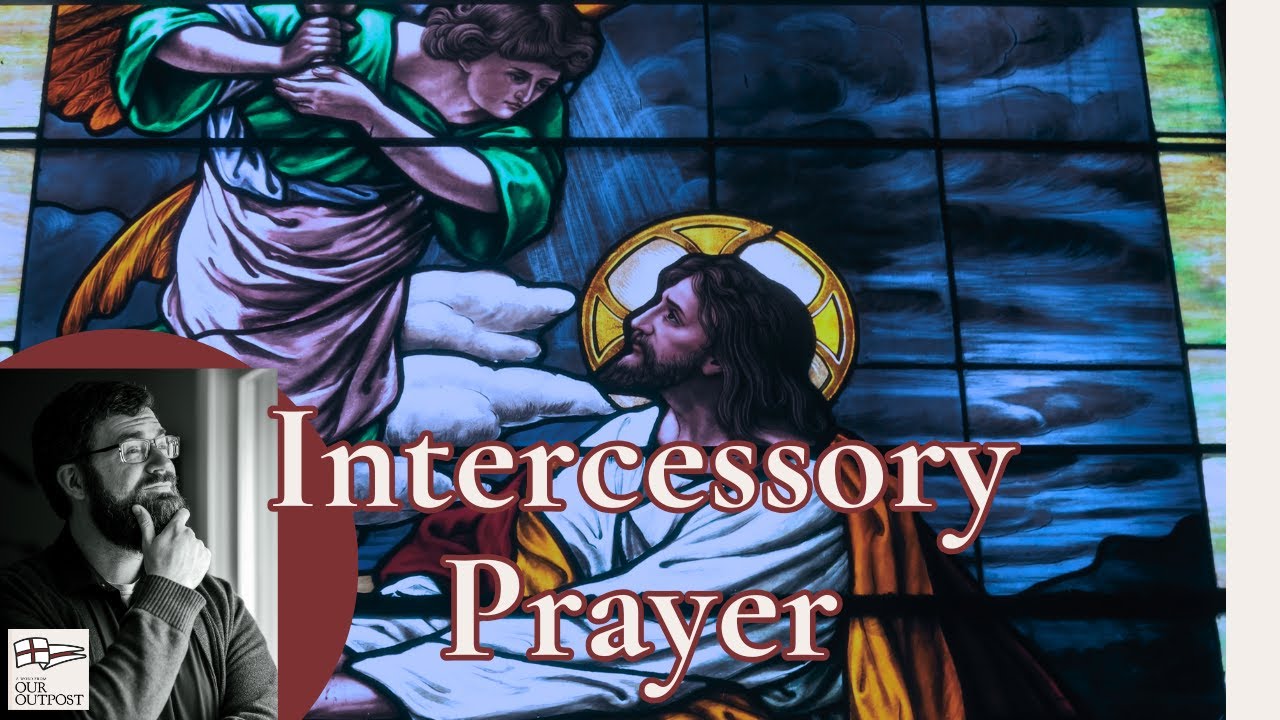
Episode 205 · 38 min · With Joseph Gruber
Intercessory Prayer
Take the Our Outpost Quiz
A free four-minute self-assessment for Catholic couples and singles. Tell us who you are, answer a few questions, and get personalized results emailed to you, with at least one way we at Our Outpost can help you answer the call of matrimony.
Take the Quiz →Key takeaways on intercessory prayer
- Intercession only makes sense if God hears. Moses’ raised arms deciding the battle in Exodus 17 is the logic of intercessory prayer.
- “I’ve got it” is pride. No situation is fully within our control; interceding is a surrender that acknowledges God’s sovereignty.
- “Don’t bother Him” misreads God. Christ desires our neighbor’s conversion more than we do and made Himself the most interruptible of all.
- “I’m good” is comfort. Praying for change may ask more of us, but our hearts are meant to expand and grace comes with it.
- Pray for your permanent neighbor. Your spouse is the neighbor you chose; don’t stand before the Lord having never talked to Him about them.
- Make it practical. Keep a list, offer your Rosary for particular people, bring intentions to Mass, and ask others to pray for you.
“If I pray for that neighbor, what I am doing in so interceding is that I’m uniting my heart more closely to the heart of Christ.”
Joseph Gruber
Intercede this week
Try this:
Write a short list of people to pray for, starting with your spouse.
Offer one Rosary or Divine Mercy Chaplet for them by name.
Chapters
- 0:00 Intercessory prayer
- 1:45 Moses holds up his arms
- 3:40 Were we interceding on election night?
- 5:45 Three attitudes
- 6:20 “I’ve got it”
- 7:35 Circles of influence and concern
- 9:30 Pride and surrender
- 11:30 “Don’t bother Him”
- 14:50 The interruptible God
- 16:10 Christ the intercessor
- 18:15 “I’m good”
- 20:30 A heart that expands
- 21:20 Praying for your permanent neighbor
- 26:30 Practical helps
- 31:05 Our Lady, Undoer of Knots
- 32:10 Ask others to pray for you
- 34:20 Christ’s arms on the cross
- 36:15 Events and closing prayer
Mentioned in this episode
- Exodus 17:8–13
- Mark 10:46–52: Bartimaeus
- Stephen R. Covey, The 7 Habits of Highly Effective People
- St. Philip Neri
- Our Lady, Undoer of Knots
- The Rosary and the Divine Mercy Chaplet
As an Amazon Associate, Our Outpost earns from qualifying purchases.
Full transcript
Intercessory prayer
~0:00 Welcome to A Word from Our Outpost, with Joseph and Crystal Gruber — a podcast for Catholic disciples who are wrestling to be missionary-minded in their normal and everyday lives. In the name of the Father, and of the Son, and of the Holy Spirit. Amen. Direct, O Lord, our actions by Thy holy inspiration, and carry them on by Thy gracious assistance, that every word and work of ours may begin in Thee, and by Thee be happily ended.
Amen. In the name of the Father, and of the Son, and of the Holy Spirit. Amen. Welcome to A Word from Our Outpost. I am Joseph Gruber, host of the podcast, here to talk to you about a kind of prayer that I think every Christian, every Catholic Christian would acknowledge is a good idea.
And yet, many of us I think struggle to make this part of our time, our prayer life, our relationship with our Lord. And that would be the topic of intercessory prayer. You knew that already, because that was the name of this episode. I don’t know why I’m drawing it out. But I wanted to talk a little bit about how just insane intercessory prayer is.
If we don’t think that there’s a God. And yet, on the other hand, how little we do of it. And maybe that actually is indicative of our relationship with God. So what do I mean that obviously, it’s an insane thing to do if you don’t think that either God exists or that God hears our prayers.
It is crazy to think that we could intercede on the behalf of other people and that would make any kind of a real difference, right?
Moses holds up his arms
~1:45 So the image for this would be Moses in Exodus 17, the people of Amalek are attacking the people of Israel. And Moses is up on the mountain, you know, holding his arms up, staff in hand. And as long as his arms are up, as long as he’s holding up the staff, the people are winning.
The people of Israel are overcoming the people of Amalek. And if his hands drop, then the people of Israel start to lose. And this was very humorously made into a video in this YouTube television show called The Promised Land. I don’t know if you’ve come across this, but the pilot episode is out, and it’s sort of an office style version of the events of Exodus post leaving Egypt.
So it’s like mockumentary style. I thought the first episode as a pilot was pretty funny, but it begins with this scene of Moses on the hilltop with his arms raised. And just as the day goes on, his arms get more and more tired. And, you know, his brother is saying, come on, please, you know, they’re dying, Moses, put your arms back up.
But this only makes sense. This only is an understandable scene. If we think that that kind of activity, you know, activity from a distance that has no direct correlation with what’s going on, it’s not like he’s up there shooting arrows. It’s not like he’s up there with, you know, mortars or cannons or anything like that.
He’s just up there holding a rod. And if we accept that story, like, yes, as he’s holding up the rod, they are winning. And that makes sense. Then we buy the logic of intercessory prayer. We get the idea that a man or a woman could stand before God and make a plea known, and that that plea might be heard, that that could be how the world works.
So I bring that up because
Were we interceding on election night?
~3:40 I run men’s formation for the local Knights here in Jackson, Michigan. If you are anywhere near Jackson on a Saturday morning, the first three Saturdays of each month, 7am, a group of guys get together and we do some prayer, formation and fraternity. And I recently spoke to them about this topic of intercessory prayer, because I don’t know if you remember, but there was an election somewhat recently.
And I don’t know when you’re listening to this, but this was in 2024, there was some kind of an election. And a number of people stayed up late watching the election results roll in, both from the long hours of counting, and then obviously the progression of time zones ending, polling places. So people stayed up quite late.
And I put the question to them, you know, as you were staying up late, were you interceding? Because if you think intercessory prayer matters, if it makes a difference, were you interceding on behalf of our country, on behalf of our county, on behalf of our state, on behalf of our town, or not?
And rather sheepishly, some of the men seem to indicate no, they weren’t actually interceding in that matter. And so that sort of gives rise to this question, do we not believe in intercessory prayer and its power? Do we not think that the world has been so constituted that I might be able to offer a prayer and sacrifice on behalf of another and have that be efficacious both for me and for the other person?
Do we think that that’s baloney, or are there other things at play? And I think if there are other things at play, I’ve sort of rounded it out to about three things that I’ve noticed in myself at least, maybe this isn’t you, but at least this will be helpful in any interactions with me or with people like me.
To understand that these three things might be going on. So
Three attitudes
~5:45 I would call these the I’ve got it attitude, the don’t bother them attitude, and the I’m good attitude. These are three reasons why I would not intercede for people. Even knowing that God exists, that God loves me, that God loves them, that God loves them more than I love them, and my capacity to love them will increase if I pray for them.
And in some mystical way, my prayers for them bear fruit in their life and in mine. Even knowing that even having like the intellectual assent, yes, I get this reasons why I might not actually follow through and actually intercede for people.
“I’ve got it”
~6:20 The I’ve got this attitude, this idea that, well, I don’t need to ask God for help with this person or with this situation because I’ve got it already. I understand the problem and I understand what needs to be done and all is left is for me to do it. The doing is what matters and bringing God into this is not going to make it a difference one way or the other.
So this is interesting one, because there is no situation that is so simple that an overcomplicating factor couldn’t come into play. There is no complete, I have 100% control over this event or over this interaction, such that we actually are justified in ever saying that I’ve got this totally and completely locked down.
I’ve got this squared away. So this is like a fundamental misapprehension of reality on my part. This is me saying, I don’t actually understand how the world works, that I’m trying to oversimplify things and I’m trying to assume that I have more control than I have or all the control that I need.
So this is interesting. It’s saying that, you know, if you’re familiar with
Circles of influence and concern
~7:35 the seven habits of highly effective people in that book, I’m told, because I haven’t actually read it, that there are these two different spheres, a sphere of influence and a sphere of concern, that the sphere of influence are the things that I actually have some amount of control over. And then the much larger thing, sphere is the sphere of things that concern me, but I don’t necessarily have control over.
So like the weather, I don’t have control over the weather, but it does concern me, right? Gas prices, I can’t control gas prices, but it does concern me. Things that are within my circle of influence, things that I can deal with, right? Like I can bring an umbrella with me because the man who brings an umbrella is prepared for rain, or I can put aside more money for gas or decide to walk more or bike more, right?
Like those are things within my control that can help me to adjust with the things that are outside of my control. If I’m not interceding on behalf of a neighbor or a friend or a situation, am I saying that I have enough within my circle of control that I don’t need God? That the circle of concern has collapsed into the circle of influence and I actually have all the influence I need.
That’s a scary proposal because none of us can actually collapse the circle of concern down completely into the circle of influence. That’s not a thing that we can do. We are limited creatures by our very nature. We are not unbounded and we are impacted by other things in the universe. If we weren’t impacted by them, we would be in a parallel universe to those things because everything is connected.
That means things concern us that we might not have any direct influence over.
Pride and surrender
~9:30 So I think part of this is the arrogance, right? To arrogate is to take upon yourself something that is not yours, that is higher, so I can arrogate unto myself a certain amount of control or authority that I just don’t have and my unwillingness to intercede or my uncomfortableness with interceding might be flowing from a kind of arrogance or pride.
So that just full disclosure, if I’m not praying for you right now, as you’re listening to this, one reason is because I am a proud man. It’s because I deal with some degree of arrogance that is off-putting and is not good and is not going to be something that I can carry with me into heaven, which means I should drop as soon as I can, which is an interesting thing.
If I were to intercede more for people, that would be a way for me to dispense with some amount of my pride because every time I intercede for someone, it is a surrender, an acknowledgement of God’s sovereignty and of my creatureliness and of my limitations. So one of the most healthy things that I could be doing to deal with my arrogance and my pride is to intercede for people, is to say, I don’t got this.
God, I give this to you. You have all of this because the one being for whom the circle of influence and the circle of concern perfectly coincide is God himself. He does have control over everything and he can do all things. All things are possible with God. Okay, so that’s one attitude. Maybe it’s an obvious one to you, but it’s good to point out.
If you’re not interceding, is there some degree of pride going on and is that something that you want to carry with you for the rest of your life? A little hint, it is one of the things that makes you less popular and is destroying your relationships. So it might be worth dropping. Okay, the other attitude,
“Don’t bother Him”
~11:30 the don’t bother him attitude. I don’t want to bother our Lord about this issue. And I think this is, this one is a fascinating one because it seems like it’s out of humility. It seems like it’s like a very modest position to say, you know, the problems that I’m facing or my desires or my hopes, my heart that is longing for this person’s conversion or that person’s conversion.
I don’t want to bother God with these things. And I think this is a really weird one because it’s pointing to a fundamental misapprehension of who God is and what he is desiring. God is desiring all good. So if the thing that we’re desiring is good and is actually good for us and good for the other person, not only are we not bothering God by talking to him about it, we are actually becoming more conformed to his heart who desires these things too, but desires them more than we do.
So let’s give an example. Let’s say you have a neighbor. Let’s say I have a neighbor, they’re not Catholic. I would like them to be Catholic and I don’t want to bother God with praying for them because I’m like, well, you know, he’s busy. Ridiculous statement. He’s outside of time. Or I don’t want to bother him with this because it’s like a complicated, messy situation.
I don’t want to, I don’t want to dirty his hands. Ladies and gentlemen, dirtying his hands is precisely what Christ did when he became man. That’s what he’s there for. He literally like was born into a stable. He worked with his hands. He traveled the world. His hands, I mean, this is even something that the Pharisees complained about is that his disciples weren’t washing their hands enough.
He’s not afraid of messy situations. The other thing is he desires the conversion of my neighbor more than I do. He desires the conversion of my neighbor more than I do. So if I pray for that neighbor, what I am doing in so interceding is that I’m uniting my heart more closely to the heart of Christ, who is longing for that person to come to know him more deeply, more personally, more life-changingly.
And so for me to say I don’t want to bother Christ with this petition, with this with this ask is to say, it’s actually to be skeptical of the heart of Christ. It’s to say I am skeptical that God could actually be desiring this thing too. And that unfortunately betrays a kind of misunderstanding of our relationship with God.
If we consider him as someone who calls us friend, it means that he does desire the best for us and for those whom we love. And so if we’re saying I don’t want to bother him, he wants to be bothered. He entered into the story of our lives to be bothered. He became the most interruptible of all beings.
Like what is the story of Christ? It’s a 33-year walk to Jerusalem, to the cross, marked by so many interruptions. And he set it up that way, in part, to let us know that he’s okay with interruptions, even when other people are not okay with him being interrupted.
The interruptible God
~14:50 Like when Bartimaeus is crying out, son of David, have mercy on me. And they’re saying, be quiet, don’t interrupt him. He’s like a week away from his passion at this point. He’s on his way to Jerusalem. He’s in Jericho, not very far from Jerusalem. He’s almost there. And they’re saying don’t disturb him.
He’s almost there. Whatever he’s going to be doing, he’s going to be doing it very soon. Jesus is like, no, bring this guy to me. I want to be interrupted. That is the kind of God I am. I am an interruptible God. So the don’t bother him. I get this because there’s a kind of pusillanimity, smallness of soul that I wrestle with from time to time that I say, you know, what am I to God?
And like, that’s not for me to answer. That’s actually for God to answer. God can answer what I am to him. He has answered. He actually loves me. He desires my good. And he would like it if my heart were more in conformity with his own, because his heart is loving perfectly. And he would like me to be able to do that too.
I will experience the greatest freedom when I learn to love as he loves. And intercessory prayer is a way to do that.
Christ the intercessor
~16:10 One of the teachings about the agony in the garden, the night in Gethsemane, he’s praying for the cup to pass from him. But there’s this longstanding tradition that he is interceding on that hilltop for all of us from that point on, in a very particular way, entering into the pain and suffering of the whole of human history, because he wanted to do that.
He didn’t have to do that. You know, there are some traditions that say that he, throughout his entire lifetime, experienced all of the pain of human history. Again, he didn’t have to do that. This is a lowercase T tradition. You don’t have to say that that was his experience throughout in order to be Catholic Christian, as far as I can tell.
I think it’s a sensical tradition that he actually desires to enter into the muck of our lives. But this is why he came. So it’s not only missing the point of what he wants and what he wants from a relationship with us, but also what he wants of the goods that we want.
It’s us missing out on a deeper relationship with our Lord. If we intercede on behalf of other people, we’re actually coming closer to the heart of Christ. That is just a thing. He is the ultimate intercessor. He is the ultimate mediator between God and man. He is the God-man. He actually wants us to join him.
He wants us to participate in his life. He wants us to become like him in all things, because he became like us in all things but sin. He wants us to become like him in all things. And that includes interceding on behalf of other people, on behalf of situations. This is, and that can be a heavy thing, right?
The heart of Christ. It can be scary from the outside because it’s the heart that got pierced. This is also where he’s calling us home. The third reason I think intercession sometimes becomes sort of a questionable practice is
“I’m good”
~18:15 the I’m good attitude. And this attitude is the attitude of the comfortable. It’s the attitude of I’m actually okay with people being the way they are right now. And I don’t know if I really want to have deeper relationships with people, which would be provoked by their ongoing conversion, because that also might have to call more from me.
So this kind of comfort, well, if my neighbor became Catholic, then I might be held to a higher standard and I might have to be more of a living witness of the love of Christ. Or if this situation were actually resolved, I might actually have to do more. I might have to do more difficult things in the process of it becoming resolved.
So this love of comfort, this love of the status quo, this might be holding us back from intercessory prayer as well. When we’ve given up on other people, when we’ve given up on things changing, or when we say, I don’t need their salvation, or I don’t need their good, or I don’t need things to change.
Even if people do ask for prayers, it doesn’t really matter what I do or say, because they’ll just deal with it. And I get this too, right? Like this is part of concupiscence. So there’s pride saying, I’ve got this. There’s pusillanimity with the don’t bother him kind of attitude. And then there’s concupiscence.
There’s the, well, it’s actually easier to deal with the world as it is, not as God would like it to become. And if I don’t enter more deeply into the story of salvation, then no more will be asked of me. That I can say, I’m doing what needs to be done now. And I don’t, I’m not interested in adding more to the plate.
And I think this is really weird because the plate that upon which our life is laid, is served, I guess, is a plate that can expand. Right? Like our heart is meant to expand. It’s meant to be able to comprehend more. It’s meant to be able to love more. That’s what the heart is made for.
It’s
A heart that expands
~20:30 St. Philip Neri very famously, after an encounter with the Holy Spirit in the catacombs of Rome, his heart actually did start to expand, like physically expanded, his ribs had to break and then be sort of reformed to allow his heart to beat more passionately. And this is one of the things that I think we’re missing out on, is that if I pray for other people, and more might be expected of me because of that, that I will be given the grace I need, that I will be led down the road that allows me to love more.
And that’s kind of the whole point of the Christian life, is for our hearts to achieve their proper dimensions, such that we love God with our heart, mind, soul and strength. And so that we love our neighbor as ourself. So to bring this home, speaking of neighbor,
Praying for your permanent neighbor
~21:20 our permanent neighbor, if you’re married, is your spouse. If you’re unmarried and called to marriage, your permanent neighbor is the one that you will choose to be your bride or your groom. That is your permanent neighbor. God gives you the opportunity to choose your permanent neighbor. This is an amazing thing. This is also why interceding on behalf of your spouse is such an important thing.
Because how horrific would it be to stand before the Lord on Judgment Day? And him asking, so this neighbor that you chose, that I let you choose, that I gave you a whole sacrament of choosing, you never really talked to me about this spouse. You never really talked to me about your wife or about your husband.
And you want to explain why you didn’t want to pray for your wife or for your husband. And to have to look at our Lord and say, well, you know, I was pretty sure I was going to love my spouse the right way from day one. So I didn’t need you in order to love my spouse better.
Thank you very much. But it takes two to get married in my book, Lord. Or I didn’t really want to bother you because it’s just our marriage. It’s just like the whole life that we built together. It’s not a big deal. It’s not like something that you think is important or that you would want to get involved in.
It’s just like a, it’s a little side thing, Lord, you know, not a big deal. You know, the woman or the man that you gave to be my spouse, you know, it’s not that important whether or not I pray for them. Or the, you know, whatever kind of life we built by ourselves, you know, it was comfortable.
It was like an old shoe. It’s like just comfortable, just the way that I wanted it to be. And I didn’t want to bring you in because I thought you might make things a little bit messy, that you might bring things up, that I would rather not be brought up, that you might cast light on things.
I would prefer stay in darkness. I was just good with how it was to begin with. How scary would that be to stand before our Lord? And he asked, why would you never talk to me about your neighbor, your spouse, and to sort of default to one of those three explanations. Maybe you have a fourth, maybe you have another legitimate reason why not praying for your spouse would be a good idea, whether you’re married or single and hoping to be married.
Maybe there is a good reason not to pray for them. I don’t know. Uh, maybe they’re already a canonized saint in your book and it’s not that you’re good, but they’re good. You know, you’ve, you’ve got them so high up on that pedestal that they’re never coming down. That would be a weird thing to say to our Lord.
Like, well, why would I pray for them? They were already perfect. Wink, wink. Like, who are you fooling? Who are you fooling? If you’re telling our Lord that he knows exactly the imperfections of your spouse. So do you. You know that they’re not perfect. So that’s a silly one too. So even if you just came up with a reason, that particular reason, it’s still a bad reason.
So why do I say this? Uh, one, uh, who is this podcast for? Obviously this podcast, first and foremost, if it’s not speaking to something that I think is relevant to my life, that I shouldn’t be doing it. If I don’t think that my spouse would gain anything from it, I shouldn’t do it.
But I also think this might be a helpful thing for you. Listening to this episode to ponder, do I make time to intercede on behalf of other people? Not because it’s my duty, not because, uh, if I don’t do it, these relights will all die. Uh, I don’t want, I don’t want this to be seen as like, uh, something that you sort of devolve into a realm of scrupulosity or superstition.
Like, if I don’t pray for this person, they’re going to die. If I don’t pray for them, they, they’ll definitely go to hell. That’s not what I’m saying. I’m saying that there’s this beautiful opportunity to be more closely united with the heart of Christ, to speak to him about your deepest desires, both for yourself and for those whom you love.
And we’re kind of silly for ignoring it. That’s what I’m trying to say. So to ask, is it a matter of you just needed a reminder and this episode serves as that, as that reminder, that would be great. It might be that you need to take a few steps to set yourself up for success in order to pray for the people who you care for.
In which case,
Practical helps
~26:30 one of the easiest things to do is to just have a list of people you want to pray for, right? Like I go through a list for my daily rosary, uh, as long as I start that rosary, not too early. Sometimes if I pray it too early in the morning, I’m just on, I’m just, for everybody that I’m supposed to be praying for, Lord, I offer up this rosary.
Um, but usually I’ll go through and it’s sort of a ranked list, right? Like my wife ranks pretty highly in my people that I’m praying for, uh, versus, you know, like the, the men’s formation thing that I do for the Knights of Columbus is actually fairly low down on that list of things that I pray for regularly.
And that’s okay, but they are people that I pray for and it is a thing that I pray for. Um, so to have an opportunity in which to pray for, for people, right? As we pray a rosary, it’s filled with intercession, pray for us sinners now. And at the hour of our death, they meant who, who do you think is included in the sinners?
Obviously you and me, um, I know that I’m a sinner. So I’m letting you know, uh, you’re, you’re praying for me every time you pray a rosary, every time you pray a Hail Mary, you’re, you’re praying for me. Thank you. I appreciate it very much. You’re also praying for yourselves, which is awesome because it’d be great if you stop sinning just like it would be great if I stopped sitting.
Uh, but you’re also including everybody else in that and to be a little bit more intentional about who that everybody is so that your heart can be expanding as it ought to be. So, uh, maybe it’s having a list handy. Maybe it’s having, you know, like on the first page of your prayer journal, as you open it up, have a sticky note with all the, the names that you want to pray for the most.
If you pray as a family at night, maybe it could be included sometime to intercede on behalf of people. Um, I’m afraid that whenever I do that with my family, it becomes kind of a rote thing. And so I’ve been wondering if it’s something that we should try to mix up a little bit more and maybe that’s something you need to do is to mix it up a little bit more because the idea is not just these words matter.
Uh, it’s also you matter and your heart being changed matters. And that’s what the expression of prayer ought to be doing. Right? Like Moses, uh, he actually had to learn humility in, in, in the intercession because he, he, he himself needed intercessors in order to keep his arms up, right? Like, uh, Aaron and, oh, who was, who were some of the other guys, a couple of the other guys had to hold his arms up for the remainder of the day.
Um, anyway, so having a list, having a, a time or a place or a way in which you’re praying for other people, if you pray a daily rosary to include explicitly who you’re offering that up for, if you’re not praying a daily rosary, may I recommend it? Uh, what I had to do recently, just as a, uh, maybe helpful thing is I told myself, I’m not actually going to use my phone for anything other than to look up daily readings or the like until I’ve prayed a rosary.
And so if I want to check the news, or if I want to look at my email, or if I want to, you know, look on social media for whatever reason, that I, I should pray a rosary first. And if I’m going to pray a rosary, I might as well be offering that rosary up for someone praying a divine mercy chaplet, praying that, especially for those who are dying that day, for those who have died, for those who are, uh, on the brink of death.
Um, the Catholic faith is filled with opportunities to intercede. When we go to Mass, we should be bringing all of our intercessions in our hearts, like during the offertory, as the gifts are being prepared to lay everything before our Lord and, and, you know, whatever kind of a mess it is to hand it over to Him, right?
Like
Our Lady, Undoer of Knots
~31:05 Alexander the Great was given this Gordian knot to unravel, and the Gordian knot was supposed to be unraveled by the man who, was going to take over the world. And apparently Alexander the Great took out his sword and sliced through the knot. And he said, you know, I, I solved this thusly or something like that.
I mean, he said it in Greek. So however, that would have come across in Greek. But whatever the knot is in your life, there’s the way of the world to solve it, which is to just slice through it. And then there’s the way that God wants to solve it, that Christ came to solve it, is that He took all of the weird turns and twists of our lives.
And in His life, in His passion, in His death, and in His resurrection, He actually went back through and undid all that has been done, if we give it to Him, right? Our Lady, undoer of knots. She also doesn’t mind getting her hands dirty. She also doesn’t mind helping to untangle the weird web of our lives.
Ask others to pray for you
~32:10 These are people also to ask for other people to intercede for you. That’s also a huge thing to say, here’s, here’s what I have going on in my life. Would you pray for me? I, I sometimes still in the habit of asking people how I might pray for them. And I’m still surprised when they return the question, because I don’t usually think these are the most pressing things in my life right now.
But I should actually be thinking of that. And I should be reaching out to people and saying, would you please pray for this? Would you please offer this up? Because again, if you’re not a Catholic Christian, intercession doesn’t make any sense, because we can intercede for anybody. Nobody is on the official list of the damned.
So we can always be praying for anyone who is dead. If somebody is declared a saint, we don’t need to pray for them to be in heaven, but we can then enlist their prayers. So we can, we can pray for anybody. We can pray for any situation. We can pray for any time.
We, we have been given like a free reign to, to let our hearts expand, to, to embrace all, which is kind of cool. This is not a universalist claim. This is not a universalist stake that I’m putting in the ground. This is an intercessory kind of claim that we are capable of interceding on behalf of Pert near everybody.
So that’s, that’s what I have to say about intercessory prayer. If you’re not doing it, do you just need to be reminded or is there some amount of pride or pusillanimity or concupiscence holding you back, in which case all the more reason to embrace a life of intercession. It might also be helpful to find people who are good intercessors and to just pray with them.
It’s also really good to meditate upon Christ during his passion death, beginning with the agony in the garden, right? Like to pray the sorrowful mysteries of the rosary and to realize like that is him interceding on behalf of everyone.
Christ’s arms on the cross
~34:20 The Exodus 17 story of Moses standing upon a hill holding a rod up with his arms is brought to fruition with Christ on the cross, that he stays upon the hillside with his arms up, rod literally nailed to his hands, and that he is making intercession on behalf of us all, and that the life of an intercessor
is one that is craving to be like John, the beloved and Mary, and to be at the foot of the cross and to be united with Christ in his suffering for the sake of the world and for the sake of those whom we love and for the sake of those whom we are called to love, even if
we struggle to love them. So that’s intercessory prayer. Hopefully this is helpful. If you do find it helpful, would you do me a favor? The favor is this. Would you, could you either write a review or subscribe or share or what’s another button that you could press? This is a, this episode is ending.
Could you please, would you please share this with people and let people know that this is a worthwhile thing. That way more people might find it. And then this particular episode might help to launch an army of people who are interceding for our families, for our neighborhoods, for our towns, for our counties, for our states, for our country, for the world.
And that would be meaningful. That would be tremendous. Not the least of which because it means that we’re laying down our pride and getting rid of our pusillanimity and laying down our concupiscence and becoming the men and women we’re called to be in conformity with Christ and loving God and neighbor as we ought.
So this episode hopefully is a good one for sharing. Would greatly appreciate that. And then
Events and closing prayer
~36:15 we do run a marriage ministry. That’s why I brought in the whole, your spouse is your permanent neighbor. That’s a big deal kind of thing. So if you want to check out our website at ouroutpost.org, we have events coming up in a little bit less than a month. We’re doing a Catholic singles retreat in South central Michigan, which is going to be a lot of fun.
We did it about six months ago and really enjoyed it. I think it’ll be a great time. What else do we have going on? We’ll be doing some kind of a workshop in December for married couples. It’s not yet on the website, but that is coming up soon. We just need to nail down a date.
And then we have a few other things going on. You can also check out our website on that. You can see that we also have a second podcast called Love Your Marriage. This episode is long, right? This is over 30 minutes. The Love Your Marriage episodes are shorter. They’re usually between 10 and 12 minutes.
So they’re easily listened to, hopefully have a kernel of something worth working on and discussing with your spouse. That’s particularly for Catholic married couples, but it’s a podcast and it exists as well. And you are faithful listener who has listened thus far. You might be interested in that. I think that’s all I’ve got.
Thank you so much for listening this far. It’s really a delight to be with you in the name of the Father and of the Son and of the Holy Spirit. Amen. Glory be to the Father and to the Son and to the Holy Spirit as it was in the beginning is now ever shall be, world without end.
Amen. In the name of the Father and of the Son and of the Holy Spirit. Amen. From Our Outpost to yours, thanks for listening and a special thanks to JohnMarc Skoch for the music. Check him out on Spotify.
Keep listening
Share this episode
Who is one person you could start praying for by name this week?