
Jared Smyth served 14 years with FOCUS and now helps parishes strengthen marriages with Communio. He talks with Joseph about finding real faith amid a watered-down Catholicism, learning to want to pray, conviction in evangelization, and why the Church must invest in families.
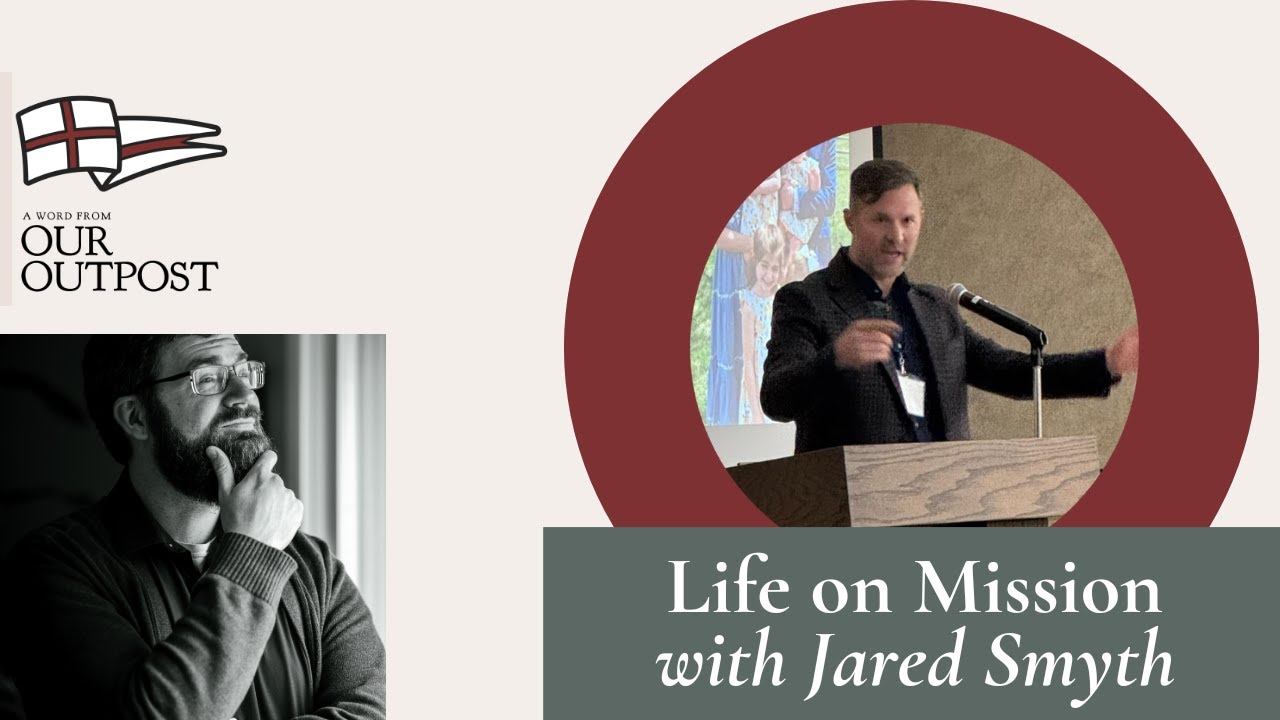
Episode 225 · 72 min · With Joseph Gruber and Jared Smyth
Life on Mission with Jared Smyth
Take the Our Outpost Quiz
A free four-minute self-assessment for Catholic couples and singles. Tell us who you are, answer a few questions, and get personalized results emailed to you, with at least one way we at Our Outpost can help you answer the call of matrimony.
Take the Quiz →Key takeaways on Catholic mission and marriage ministry
- Give people the whys. Challenging the faith without giving reasons can inoculate people against it. A teacher who explained why we believe gave Jared a firm foundation.
- Learn to want to want. Jared found that desire for God grows through the slow work of facing our attachments, not by asking God to do it all for us.
- Conviction beats polish. A technically perfect gospel presentation matters less than real conviction, and your own personality, lifted up by the gospel, is part of the mission.
- Make prayer something to look forward to. A simple kids’ examen at home and a candlelit time of song and thanks can help children see the point of prayer.
- Invest in marriages. Religious practice tends to follow family health, and a few hours a year of practical marriage formation make a real difference, yet most parishes offer little beyond marriage prep.
“There’s no replacement for conviction, there’s no replacement for our own personal conversion in the work of mission.”
Jared Smyth
Try this
Give your marriage some regular upkeep.
Set aside time this year for a marriage retreat or workshop, even if things are going well.
Try a nightly examen with your kids: one good thing, one thing to work on and one commitment for tomorrow.
Chapters
- 0:00 Welcome and opening prayer
- 0:25 Meet Jared Smyth
- 2:15 Becoming a Catholic missionary
- 5:18 Early wonder about heaven
- 10:37 Healing and a good theology teacher
- 13:36 A watered-down Catholicism
- 15:18 College and a FOCUS conference
- 18:30 Remaining open
- 20:19 The primacy of prayer
- 22:11 Life in an old convent
- 23:58 “Help me to want to want”
- 26:17 Quirkiness on mission
- 28:01 Conviction over polish
- 31:00 The gospel still works
- 33:08 Prayer as a husband and father
- 41:05 A kids’ examen
- 43:18 Making family prayer beautiful
- 46:48 From FOCUS to Communio
- 48:20 How the West really lost God
- 50:18 Investing in marriages
- 56:34 Family and civilization
- 58:57 Front-porch relationship ministry
- 1:00:19 A little upkeep goes a long way
- 1:03:42 Retreats that work
- 1:05:35 What Jared is reading
- 1:10:19 Closing prayer
Mentioned in this episode
- Communio, which equips churches for marriage and relationship ministry (Jared: [email protected])
- FOCUS, the Fellowship of Catholic University Students
- Mary Eberstadt, How the West Really Lost God
- Brad Wilcox, Get Married
- Carle Zimmerman, Family and Civilization
- Ruth Burrows, Essence of Prayer
- Fr. Timothy Gallagher, The Examen Prayer
- St. John Paul II, Familiaris Consortio
- First Things and New Polity
As an Amazon Associate, Our Outpost earns from qualifying purchases.
Full transcript
Welcome and opening prayer
0:00 Welcome to A Word from Our Outpost, with Joseph and Crystal Gruber — a podcast for Catholic disciples who are wrestling to be missionary-minded in their normal and everyday lives. In the name of the Father, and of the Son, and of the Holy Spirit. Amen. Direct, O Lord, our actions by Thy holy inspiration, and carry them on by Thy gracious assistance, that every word and work of ours may begin in Thee, and by Thee be happily ended.
Amen. In the name of the Father, and of the Son, and of the Holy Spirit. Amen. Welcome to a word from our Outpost. I am Joseph Gruber, host of this podcast, and with me today,
Meet Jared Smyth
0:25 special guest Jared Smyth. Hello, Jared. Hi, Joey. How you doing? Nice to be here. Good to have you. Would you, for our listening audience’s sake, introduce yourself. Yes. So Jared Smyth lived out here in, just out of Denver, in Colorado. I don’t know how many other Denver’s there are that aren’t in Colorado, but we’re in the Colorado one.
And so grew up about half my life in Pittsburgh, then moved out here when I was in fifth grade. So did FOCUS for a long time. And so got a great wife from South Louisiana, Mallory, and five little kids, all nine and under, finally got a boy. The joke I like to use is there’s this river in Boulder where 90% of the fish are female, because there’s so much birth control in the water, it’s like changed their gender.
So I used to blame all the girl things on that. But anyway, we got a little boy here about 10 months ago, a little David, and life is, life is good out here. Awesome. Yeah. So as far as context for the listeners, Jared was a missionary on a campus that I went to as a student.
In fact, he was co-hosting a Bible study, the very first Bible study I ever went to back in 2006, I want to say. Yeah, outside of Joey’s, you know, 56 siblings, you know, and all the good priests and everything else. Yes, knowing Joey and my first Bible study in 2006 was wonderful. I guess you were a sophomore at Carnegie Mellon back then, and you had a beard even back then, it wasn’t as pronounced, but it was, you know, it was pretty good for a sophomore.
Thank you. I appreciate that.
Becoming a Catholic missionary
2:15 So I was wondering if you could fill us in, what led you to becoming a full-time Catholic missionary? Because that’s not, one, it’s not a common choice even today, but going back almost 20 years, that was an even less common choice. Yeah, that’s an interesting way to say it, because there’s so many things that have changed in the Catholic world since the early two, I mean, lots of things have changed in the Catholic world depending on what timeframe you’re looking at here, but even just in my short ministry life, sort of going from something that was very reactive in a negative way towards Catholicism to a place now where there’s still a lot of different ways that I think we’d want our parishes and our society, you know, these things to be better, but there’s so many great apostolates, examples of fruitful parishes, priests are on fire, you know, I’m very hopeful for the future of the church, even if, you know, in some ways we don’t want to hope for this, in some ways it seems rather obvious that there’ll be, you know, to go to Pope Benedict’s little prediction in the 50s or 60s that there’d be a smaller, stronger church, that’s obviously true, the question is how much we can delay these smallness, right, through our own evangelistic efforts here, or childbearing efforts, I suppose those can both help in different ways.
So, you know, in terms of how much do you want here, do you want the whole soliloquy? I mean, you’ve got the time for a soliloquy. Yeah, that’s great. I don’t use that term too often, but like maybe on interviews I use words that are bigger than I use in common parlance, like the word parlance.
Anyway, so, you know, I suppose for me, kind of spiritual autobiography or whatever else, growing up I never had a particular antipathy towards the faith. My parents had a, your kind of Baltimore catechism upbringing, and then as, you know, they graduated from Duquesne, Catholic school in Pittsburgh, not Duquesne, which it looks like, in 77 or 79, I think, and you know, there appeared to be quite a bit of crazy teaching that they had there at their school, and even, you know, hearing stories about them and when we moved out here to Denver in 95, which is fifth grade for me, you know, sort of hearing teachings like pro-life teachings or birth control teachings or stuff like this in a much stronger way, you know, or certain aspects for the first time, right, was a, they always were committed to sending us to Catholic school and things like that, but I would say their personal understanding of the faith really started to grow maybe a little bit more through the mid 90s.
And so for me, always, you know, kind of a creative kid, like to read a lot, maybe a little goofy. I’m probably not goofy anymore. I’m sure I did away with that a long time ago, but, you know, I remember, you know,
Early wonder about heaven
5:18 early, early memory of having a conversation with my mom was talking to her about heaven and being a little weird, you know, weirded out, like, what’s heaven like? It seems like it’s a long time or whatever else, and her telling me that heaven is the best place I can imagine, but it’s even better than that with all your friends forever, and at the time, this is probably, you know, kindergarten or something at the time, the best place I could imagine was Kennywood, which is an amusement park in Pittsburgh that’s really fantastic, built into the hills, you know, great for a local place.
And, but to me, being there for millions of years on end and riding all the same roller coasters and stuff would eventually tap out a level of enjoyment to get to the point where I feel bored. And so I started to develop this existential dread about being so bored and having that God would have to make me not exist, right, to kind of slake my depression or, you know, existential angst there.
So I would, people talk about having to go, like, hide under my bed when I was a little kid, and, you know, that only, that only partially remains to this day, you know, but these kind of thoughts, the point is, as I’m reading, as I’m thinking about all these kind of things, I really enjoyed, you know, getting into that kind of stuff in a deeper way.
And I would say, when I was little, even some, you know, like some experiences of the demonic, some experiences of healing ministry, you know, when I was a kid, apparently, you know, the house we lived in, in Pittsburgh, I don’t know, this is weird to say in an interview, but, you know, it’s like, it was like, I literally haunted house where parents would be upstairs and plates would break across the room or there’d be breathing and shining lights.
And I would see certain things like that too, and I was little and talk to priests about it. And, you know, until you get older, you don’t really, you don’t understand that maybe that stuff is unique, or maybe, you know, I thought it was kind of fake until my parents were like, we never told you about all the crazy stuff in the house.
It’s like, you didn’t, mom. And so, I think, I think that some of those things always kind of put me in a place where I thought the Catholic thing was real. But it also felt like, and this would have been an experience that I had, you know, kind of from middle school on through colleges, you know, in certain ways, and for different reasons, there was a posture that many people had in the church that kind of pulled the rug out on a lot of the beauty and the tradition and the fullness and the depth of the Catholic thing.
And that was the kind of Catholicism that I was mostly experiencing in a lot of ways. So, to use an example, there is a religious sister that my mom had in grade school who taught all the kids and whatever else. And, you know, she was in her 90s or whatever else. So, when I started FOCUS and went back to Pittsburgh, we went to visit her at her retirement home or whatever else, just to do a little, you know, a nice little thing for my mom or whatever.
And so, we got there and she’s like, oh, it’s so great to see kids of students. They always come here, you know, and she’s like, let me tour you around. And so, you know, she’s like, let’s go to the beautiful chapel first. You want to believe how beautiful it is. She’s like the stained glass and the paintings and we walk in and the church is super bare and like very stripped down.
And I think the altar was sort of in the middle of, you know, the walkway coming back. It was like a simple wooden breakfast table, basically. She’s like, oh, yeah, yeah, I guess they changed this a little bit. That’s right. Well, you know, like, let’s go up and, like, look at the beautiful art behind, you know, where the altar used to be.
And so, we go up and she’s talking about the statues and the paintings. And as it turns out, it’s just kind of etched glass and you can see where the big roque or, you know, a roque, I should say, you know, ornate stuff used to be there. And she’s like, oh, yeah, yeah, they must have changed that too.
That’s right. Well, let’s go down and talk to the religious sisters, you know, my friends. And as we go down, you know, one of the things this was early on in FOCUS in 2006 or 2007. And so, um, it was pretty easy to count vocations, you know, it’s, I don’t know what it was if we had a hundred or two hundred people who had, you know, entered religious life.
And I had mentioned that to her and she said, oh my gosh, that’s the most exciting stuff I’ve heard in so long. You just don’t hear about people, you know, wanting to become priest or sisters. She’s like, tell my sister. So, we go down there and talk to this one sister and she’s like, tell her what you said.
I said, well, you know, since 1998 we’ve had a hundred people enter religious life and this many people were becoming a priest and the sister put her hand in my face and said, stop. I don’t care if another guy ever becomes a priest until there’s women priesthood, like I just don’t care about any of that.
And so, that’s just an analogy of here’s this like wonderful lady who had given her life to the church, who would obviously believe stuff deeply. And there were certain people for ideological reasons that had pulled the rug out from under her. And right, so there’s a generation of Catholics, it seems like they were kind of picking up the pieces.
And so, for me, in a more mature way, I think a couple things happen in middle school. Is this fine? I’m just talking. Oh yeah, no, this is great. Okay, great. You know, I like to talk about myself. Is that a virtue? Anyway,
Healing and a good theology teacher
10:37 in middle school, two things I remember very particularly. This is a Catholic school out here in Denver. One was we had a guy who had the gift of healing come in from Ireland. And our old pastor, this church out here, St. Thomas More, Father Walsh, was sort of into parts of charismatic healing movement or whatever.
And he had this gift where he could, you know, people have bad problems, that have problems with their feet or whatever, so he’d pray over their feet and they would like, one would be shorter than another, and you just kind of watch them pop into place. Or we went, I think this is sixth grade, maybe he was seventh, you know, we went to one of his sessions and he wanted everyone to, like, pray in tongues.
And, you know, this was not, you know, this sort of, ever done something like this, kind of sounds like you’re just doing gibberish and the question is how bold and proudly you try to do it. So anyway, he’s like, you know, go ahead, like, forever people just start talking, you know, and stuff like that.
And so everyone in the church is just doing their thing. And I realize it’s, like, super beautiful. There’s, like, all these harmonies and I was, like, very impressed with it. And anyway, I was, you know, kind of doing my own thing. I was, like, okay, but I think I’m done now and I stopped.
And at the same, like, second, everyone at the church, like, stopped, you know. And I remember in grade school, we brought our class over to see this guy after I had seen him earlier. And he was telling the class and telling the teachers, hey, I think there’s some people I’d like to pray over.
And the teachers were like, well, we’re at time for our 15 minutes, you know, so now we have to go back. And, you know, like, that’s the kind of Catholicism where here you are. And I like very good teachers. But there’s a guy with the gift of healing who’s going to give a real tangible expression to the power of the Lord to all these grade school students.
We don’t have time because we have to get back to math class or something like that. And, right, it’s sort of a denigration of the centrality and the fullness in the reality of the Catholic thing. There was kind of a common theme. So the great stuff was in seventh and eighth grade, I also had this world champion weightlifting theology teacher named Ron Garofalo, like, broken world records and stuff like this.
And he’d pinch your shoulders if you were, you know, acting out in class. It was nice to have a good dude, you know, teaching theology. And he taught us a lot of the why’s behind the what’s the faith. So why to believe in God, why to believe in Jesus, you know, first cause argument, trilemma, different stuff like that that was foundational for an intellectual understanding of, you know, just a firm rock and a firm foundation of why you can believe in this and why it’s just not opinion or why you just don’t do it because your parents happen to do it or something like that.
And that was really foundational for me because I always enjoyed this stuff, but actually getting, like being able to think about it and getting into it a little deeper kind of lit me up and was really important.
A watered-down Catholicism
13:36 And then when I went to a Jesuit high school out here and there seemed to be this posture in theology class that you wanted to challenge the faith to bring people back to it stronger. Well, I don’t think that’s bad per se, but after you kind of challenge it, you have to let people know the answers of why it’s true.
And I didn’t find that that happened very often. And so, you know, for Christology, we read books like The Last Temptation of Christ or Jesus Before Christianity by Albert Nolan, very much a historical Jesus never did any miracles, maybe didn’t rise from the dead kind of thing. And that time I was kind of like, well, I guess if you can believe Jesus and not believe he did any miracles, that’s fine.
I just don’t know why you do that since he obviously did and people still do. But, you know, my experience there was most people within the Catholic context being pushed away or from the faith thing coming closer to it. And I think it’s true to say it’s easy to inoculate people to the faith if you get a weak strand of it and not kind of the whole thing.
And going through four years there, like learning the order of the Mass, but never learning why God exists or why Jesus is important or why the Catholic Church is who the Catholic Church says they are or how to pray. Like those are foundational, exceptionally important pieces that just weren’t happening. And so it was a great youth group at my home parish.
So I went there and it was nice not to sort of like be on an island with those kind of things. And some of my closest friends are still people from that youth group at St. Thomas More. And well, this is long. I guess I’m getting the last era before FOCUS, right?
College and a FOCUS conference
15:18 But when I got off to college at CSU, it was a similar kind of Catholicism to high school in terms of very progressive. We had a theologian residence there, a former priest married to a former nun. And, you know, he would tell the students, you know, read the gospels with a grain of salt because they’re written anti-Semiticly.
Or, you know, there was a conversation about the just war theory. I think Iraq was going on. And he’s like, well, if there’s a just war theory, there’s a just abortion theory and then sort of talk about it. And, you know, wouldn’t use Jesus very often in, oh, I got some coffee from my from my five-year-old.
Thanks, Clara. You helped make it. Thank you so much. It’s going to be so good with all that love, right? Yeah, a little latte. And, you know, so that was the kind of thing. People wouldn’t use Jesus. There was a suspicion of adoration. There was a suspicion of personal piety there. And so in kind of a sense, like in an island, I would just try to lead my own Bible studies.
My friend John and I were kind of an apologetics. So we keep having Jehovah’s Witnesses over again and again until they brought the head of it to northern Colorado or something like that. And going into my junior year, a friend from Boulder invited me to a FOCUS conference. So it wasn’t called SEEK back then.
And this is in 2004. And so the passion had just come out. We got to pre-screen the passion. Mel Gibson was on the TV, you know, saying, hey, FOCUS, hope you’re doing well, you know. And, you know, Jay Reyes was there, who’s always so good. But just having religious sisters walk around in habits or even having books there that were really like I could trust, you know, and not have some skepticism with whether or not they had an agenda or were orthodox or whatever else.
And seeing a bunch of other students was really awesome. You know, it was kind of a breath of fresh air. And then FOCUS would end up, missionaries would come to my college, my junior and senior year, and guys like Adam Ybarra, Denny Bram. And look, it’s just great not to be alone, right?
It takes a lot of energy to always build your own stuff again and again and again, and have a little bit of accountability for it, have a little bit of friendship for this kind of stuff. Super important. And so when, yeah, when the opportunity came up to do FOCUS, even though my parents maybe thought I was joining a cult back then, you know, it’s pretty small, you know, date for your first year, you fundraise, you know, it was awesome.
And so 2006, 24 campuses across the country, started back at Pittsburgh, which was great with you, went to Mount St. Mary’s and then ran two of our five geographic regions, about 50 campuses for a while. So loved, loved my time there. And that’s just the longest answer to that question ever, perhaps. So far, yeah.
Yes. Okay, great. Well, amazing.
Remaining open
18:30 There’s a lot in your story that doesn’t seem like it’s going to point to mission work, right? There’s a lot in your story where you could say, just give up on it, right? Like, the rug was pulled out from under you, the beauty is gone, the truth is all left up to skepticism.
Yeah. And yet, you did find community, you did find people who are pursuing the truth, the good and the beautiful. And then you did, like, you were open to that, you were you were remained open to that, all throughout that. It’s interesting, I think sometimes about because, you know, some of those experiences are sort of, they’re very particular, right?
Especially like the spiritual miraculously ones, right? And, but I think about those stories of desert wanderings, essentially, where we have this generation of people who saw all these miracles, but that doesn’t necessarily mean that they have to make a choice for the truth, right? And, and so sometimes even with that kind of stuff, you know, you can always say no, you can always just sort of through laziness, or sort of through not making it a priority, just let entropy take you to different places in your life.
And so I think those things were foundational, but that doesn’t mean anything forces you to believe. And so yeah, I’m very lucky, you know, I’ve been involved in things that have a lot of vitality, you know, even if they were small, and even if they were new, and, and having friendships within that is, you know, as much as strategy or different things like that is meaningful, the friendships pieces is probably the most meaningful.
And so you served on campus, several different campuses, you served over many campuses.
The primacy of prayer
20:19 What were some of the lessons that you learned during your time? They don’t all have to revolve around me, of course, but Yeah, right. Yes. Yeah, right. I, you know, learned, I probably couldn’t pull off a Scottish hat. I don’t know what you’d call that very well. Let’s see. You know, you know, if you, I mean, there’s probably, you know, when I think about this, I think of Christian leadership, you know, in a sense, apostolate leadership, and also a little bit about about prayer, right?
Maybe to start with with the prayer thing. I, so one thing you do in FOCUS is you do a daily holy hour, right, try to get to daily rosary and daily mass if you can. But there’s a great emphasis on the development of the interior life is a primary mode of how we should live and also a primary posture towards God provide success within the mission, right?
We work as hard and as winsomely as we can, but the Holy Spirit still converts hearts. And at the end of the day, if I’m converting other people, but not myself, that is a worrisome situation. And so, you know, when you’re on a team, there’s some accountability to get there and not like disobey job requirements to put it in a tried way.
So when I was on a team, you know, Megan McCartney, our team leader was Justin Toledo for Stomping Grounds yesterday. You know, if I didn’t get there, I got there a little late, there’d be some friendly, feminine fraternal correction on that, you know, or when I was leading a team of Mount St.
Mary’s, I wanted to be a good role model as well. And so there’s somewhat ancillary reasons, you know, or pressures why you might want to get to the chapel or whatever else. And then I moved when I started doing regional leadership and running the Northeast, I moved to Philly, and
Life in an old convent
22:11 lived in an old convent there, which is one of the great experiences of my life was sort of a broken down convent over in Port Richmond, row home Eastern European neighborhood in Philly. And people were vandalizing it, and a few guys had built a little community there, who were locals, they moved in started to renovate it, you know, and when I was there, we, the four years we have between six and 12 guys live in there is a huge place, we have mass and dinner and drinks for 30 to 50 young adults every Thursday, just a really awesome expression of grassroots Christian community that that yeah, I was so honored to be part of and it was a lot of fun.
And Philly people are very opinionated, which is a lot of fun too. And anyway, the nice thing about that is right down the steps from my room was a chapel with the Blessed Sacrament in it, my own little personal chapel there, which, you know, these days, I know we all dream about having a little personal chapel down down the down the hall.
And so I could go and pray whenever I wanted, but also wasn’t on it on a team per se. So I didn’t have some of those, you know, maybe second order pushes to get to the chapel, if I went there, it was just really because I wanted to, and I believed it or not.
And I think one of the things that that taught me was was the importance of kind of will and desire in prayer. You know, maybe like some guys, I can tend towards the intellectual, you know, I had problems, I don’t know if I say problems, but, you know, maybe I’d want to read like a René Girard or something with Father Mike in prayer instead of, you know, scripture or or do something that evolved, moving the heart more.
And I realized when I was in prayer there, I’d often pray this prayer, there was like,
“Help me to want to want”
23:58 Lord, help me to want to want to want to love you more, right? It was sort of like, you know, I know it’s good for me, God, you know, to pray more and be holier. So, but I don’t really always want to. So why don’t, you know, you don’t have to do this, but why you just miracle it, right?
And make me, you know, desire this in a certain way. Versus just doing that everyday work of, you know, deciding what am I attached to? How do I think about that in a deep way? And how do I reorient my desires or the way I think about that? Something that it takes a lot longer is is slower, is more personal, but really draws you closer and starts to, you know, make you want to love someone more, right?
So I was kind of being lazy. I was asking God to do it for me rather than taking just normal human steps and working on that in my own heart. And even with scripture, you know, like, love your enemies, you know, do you like Alexia Dabino on the scripture? Love your enemies? Yeah, I heard that before.
It’s almost a secular virtue. We talk about it so much now. But just one time realizing in the church, like who are my enemies? You know, I don’t know who would have been back then. Who’s like Saddam Hussein? Who’s the one who’s the one? Yeah, okay. Yeah, there’s one, right? He seems to be an enemy, right?
I don’t love him, you know, or plenty of other people like I say this all the time, but that doesn’t mean it had some kind of real impact on my heart on the way I lived or whatever else. And so just actually walking through that and kind of struggling with it and asking questions about do I actually believe this?
Do I actually live it? How does that happen versus just the intellectual assent to Yes, I understand that’s true. Totally different things. So I would say that piece of prayer is one of the most important things I learned about prayer. Should I give anything else on this question? Well, so I was I’ve been thinking in preparation for this episode, things that I’ve noticed about your take on mission work.
And one of the things that I’ve seen time and time again, where I’ve seen you in a particular way, and almost no one else doing it in this way,
Quirkiness on mission
26:17 is the marriage of experience and community, right? Like you are attentive to crafting experiences, to the unique, the unusual, the quirky, right? Like I literally drove to Mount St. Mary’s to be with you because you were hosting a lightsaber battle in your home with fog machines and strobe lights and light up lightsabers.
And I skipped my college graduation to do it. Right? Like the the quirkiness and the fact that all throughout your time on mission, your quirkiness was never something that you put to the side, never something that you thought was contrary to the mission, but it like fed into the mission that you were doing anywhere and everywhere you went.
So like, I don’t know what that was like on your end. I don’t know if you think of what you’re doing as quirky or especially like significant. I’m sure a lot of people think of it as quirky, probably including my wife. For those that are listening and not watching, you know, we did have lightsaber battles, but I am well groomed, you know, and I can run a little bit.
I take showers regularly. I just want to get that out of the way, you know, in case you’re listening. Yeah, you look very good. You look sharp. Thank you. Yeah, you know,
Conviction over polish
28:01 I think one thing about evangelization is that there are relationships and vision, right, like, like a sense of like, personal flair and conviction, always trump strategy and structure. That doesn’t mean they’re opposed to each other. But you know, but for instance, there’s a sense of conviction, right? You can give a good gospel presentation that is technically correct.
It has the right five points, where you go through everything well, right, there’s a professional sheen on the presentation. But that may or may not transform hearts, if people can feel your conviction towards it. Versus someone who’s had a real experience of the Lord, they like, you can tell that they just desire to bring you closer to Jesus that they believe what they’re saying.
And they may butcher some particular details of the gospel presentation of, there might be a little bit of heresy and what they say or whatever else. But, but it’s received in a completely different and more compelling way. If you can tell that there’s conviction, right, that surrounds how someone says something, there’s, there’s no replacement for conviction, there’s no replacement for our own personal conversion in the work of mission.
And, you know, when I think of guys who have been really successful gals, you know, in the mission field, all of them are very particular to like who they are, you know, and so, you know, the guys still keep in touch with, he’s a priest now, right? Mike Selensky, right? He is a very friendly Minnesotan that we put at Harvard and on the West Coast, because those were difficult places to make friends.
And, and he did it really well, just by being kind of like, goofy Mike, right? Or, or whatever else. And so, so I think the more, you know, the more you get to know people in an authentic way, in all their little like oddities, or the more creative and intentional you can be, this is sort of like, I like to make cocktails now for the last several years, right?
This is a thing. And there’s something about making a cocktail, that’s kind of like plating a meal. You know, there’s a lot of hospitality that’s involved, or there’s a sense of, you’re, you’re going out of your way, like handwriting a card to do something special for people. And any ways that we can do that, especially with our own, like desires and weirdness or whatever else, seems to connect well to people, because it’s unique and it’s thoughtful.
And yeah, there’s something about, you know, your personality being augmented by the gospel, as opposed to being kind of pushed down by the gospel that I think is really healthy. Yeah. Are there other lessons from your time on campus or in charge of campuses that you would like to share? I know I’ve learned a lot from you, Jared, so I could, I could list a few things.
Oh, that’s great. I’m glad someone has learned. That’s great. It’s always nice to hear that. I would say one thing, and then maybe there’s any other leading questions or ideas you have, please. But, you know, just the conviction that the, that
The gospel still works
31:00 the gospel still works, right, as much as the early church was, you know, successful in conversion, signs and wonders, all these kind of things, we can still be that successful. And there can be a hesitancy or a sense of intimidation about sharing the most kind of important things with different people. You know, I still do a lot of travel for my job.
Not for FOCUS, for my current role. And inevitably, you know, if people don’t have their earbuds in, like every conversation goes to faith. It goes to like meaning in life and stuff like this. And the cool thing about an airplane is you’re never going to see these people again. And so there’s a level of sharing maybe that happens that wouldn’t normally, you know, in someone’s life.
And there’s obviously a real thirst, a real hunger. You do see even in broader culture and, you know, I’m talking from a macro sense when I have conversations with people, when you have conversations with people, there’s something that sticks and there’s something that hits them that doesn’t mean everyone accepts it. But when you present the truth in a meaningful way, that kind of thing just works.
And there’s parishes, and there’s apostolates, and there’s different mission places that have completely transformed, right, where they live, because the gospel works, and because they’re taking it on earnestly. We don’t have to have a defensive position towards the culture in that respect. But what’s this thing about the airplane? The gospel works? Yeah, yeah.
I don’t know. I don’t know where I was going. I forgot. No. So you tell me where to go, Joey, because I’m, you know, ADD, I guess. No, that’s great. Yeah. So the primacy of the interior life as like foundational, that’s started your answer. That’s that’s where you probably could have wrapped up.
I think if I hadn’t pressed you for more, you probably would have been fine with that. How does that how does that
Prayer as a husband and father
33:08 lesson carry on into your life? Now you are, you’re a married man, you have five children, you travel fare a bit. Wow. What does that look like now? That’s a good question. You know, it’s it’s interesting. I just got back from this meeting with Bishop Thomas in Toledo is a good guy used to come over to our house and Philly and say mass occasionally.
And, you know, there’s something about being for me anyway, I don’t know what you feel like, but for me, there’s something about being on the road, being out and about being on mission, having certain conversations that I find really easy and really fruitful. And I really enjoy it. And I like being in those situations.
And, you know, every time I go to a different city, I want to make sure I visit a church or a couple of churches or visit the cathedral, the Toledo Cathedral, it’s like amazing, you know, and, you know, and do some prayer time and everything there. And, and right, there’s a cool thing about the Catholic world.
There’s just a familiarity, right? Any church, anywhere in the world, you walk in there and there’s a familiar presence, you know, it’s, it’s awesome. And I think it’s harder for me. I’ve been thinking about this. I think about this when I travel, it’s harder for me in the day to day with all the kids with, we have a great parish up the street.
There’s probably where I live here in Denver. I tell people there’s probably six, at least like really good parishes within a 15 or 20 minute drive, any of which, like you’d be happy to go to, and you’d be grateful for the liturgy and the sacraments and the pastor and some of the initiatives there.
You know, I’m not sure if there’s anywhere else in the country, or you could say that, you know, it’s, and it’s an embarrassment of, of riches. And, and there’s like, there’s a different kind of like simple, steady push, like in the mission of your family versus in the mission ad gentes or outside of your home or whatever, whatever we’d say here, that I still find difficult, right?
And so, yeah, so, so what is, you know, prayer life and everything look like now, what is sacramental life, right? For me, it looks like, you know, putting the, the Angelus, right, in my calendar, so I don’t forget it around noon, you know, or something like that, or it looks, it looks like, you know, I like podcasts, I like music, forcing myself to do the rosary in the car.
Like I never want to do the rosary, but I’m always really happy after I’ve done it. It’s kind of like working out, you know, and maybe working out for me, maybe people are making me look like a Star Wars nerd in their mind now. But you know, and, or when it comes to mental prayer, you know, I, like I’m not, I’m not an early bird kind of guy.
I’ve always been much more of a close down the party late night kind of person. And I don’t know, I don’t know if that’s sustainable for the rest of my life, right? For, for regular prayer time, not to happen in the morning. Mallory, when we’re not up with the kids all night, she doesn’t, even we are, she does a great job with like getting up and doing a little scripture.
And for me, I feel like it’s become more of like punctuated time throughout the day, or any time that I go and meet somebody or any time I go and do this or that or whatever else, I find it really meaningful to take the physical time and go to a church or go to a park or, or do something like that.
I’m, yeah, I don’t know, Joe, I don’t think I could be a, I don’t know if I could be a Benedictine monk. There’s something about like the monotony of stuff that I haven’t quite found a way to get pumped up about in the same way as like going and visiting a church or finding some freshness or like doing some prayer time at 3 45 in the afternoon, because I got a half an hour where I don’t have meetings or something.
There’s, there’s an energy and there’s, there’s a discipline it takes to do that. And just the act of doing it is like a success, you know, and, and makes me feel good about it. So what are your thoughts on that? I mean, one of our guests on recently was talking about you have to know yourself when you’re thinking about your own prayer life.
Like how do you work best? What are the best times for you? And, and, you know, the idea of giving God our best is such an interesting idea. Like this is time that you’re setting aside to be useless. And it’s in the midst of your travel that you’re saying, I’m willing to give that time to God.
I’m willing to take that time for, uh, for just this, you know, the true leisure, this true worship. It sounds fitting to you. It sounds like reasonable for Jared Smyth, for his prayer life to be somewhat more quirky, right? Like that. Yeah. I mean, I will say, I guess one more thing. Um, I, I do find a mental prayer to be hard if I don’t have like an additional spiritual book.
I know some people can kind of just rock it with scripture the whole time and do imaginative prayer or walk through that. Um, my most fruitful prayer is having a, um, you know, like a Jacques Philippe book or having, you know, Ruth Burrows has a great book. I just recommended my brother called Essence of Prayer, where, uh, it’s the kind of things to read a few pages and read it very slowly.
You know, all my natural tendency will be to read that stuff so I can communicate it or to understand it, but go in a little deeper or taking some small steps there. Uh, you know, sometimes I feel like scripture, people say scripture is a really important thing. The word of God, you know, it should be, um, fundamentally more important than what, uh, us mere mortals have written.
And that’s all true. But I find the, um, the intermediate nature of people pulling out some truths and emphasizing them and giving me additional things to think of. Um, that’s typically when my best prayer happens. Yeah. I mean, that, that makes sense from what I know of you. And, uh, I mean, there’s a reason why they write these books, right?
Like they’re not just doing it to make people’s bookshelves look pretty. They’re doing it because they’re able to communicate things to us that we otherwise might not be able to receive. Um, yeah, so it’s certainly filling their end. I’m sure, you know, uh, Ruth Burrows or, um, Jacques Philippe would be delighted to hear that you’re finding fruit from reading their, their work.
Well, they’re listeners to the show, so I’m sure they, well, yeah, I mean, we are our audience numbers, uh, only the best of the best. Yeah. Well, and then how does that play out to in, in the life of your family, right? You mentioned Mallory gets up in the morning and has time with scripture.
Um, I’ll tell you, I’ll tell you a random thing right now on this topic, um, that I have liked so far. We’ll see how it continues to do, but maybe it’s just fun to talk about. Uh, so the kids, I love our kids. They’re really sweet. They’re generally pretty good natured. Um, I mean, I know everyone loves their kids, but you know, I feel like ours are objectively pretty great.
And, um, but, uh, we don’t like always have neither Mallory or I are kind of like type-A task managers. We’re a bit phlegmatic. Mallory says I’m so phlegmatic. Um, it’s made her not be anymore. So here’s, you know, some marital stuff that we need to work through. But, um, uh, you know, getting to bed was hard and it was hard to sort of incentivize and you don’t want to go up there and like punish them for it all the time.
You know, maybe that’s necessary or whatever. Also, um, what I started to do is I,
A kids’ examen
41:05 I wrote them a little kids’ examen for the night. And so it’s sort of like, you know, you think about a good thing you did a bad thing you did, you know, a commitment for tomorrow. And then you have your sort of stewardship chores. So we can never find their shoes in the morning.
It’d be like a mad, you want to put your head through the drywall, like where are your shoes this time kind of thing. So now they have their shoes by the door every night, you know, or they have to make sure they’re ready to go on time to get to school, which we’re always getting there like two minutes late, you know, or, um, cleaning up their room, brushing their teeth, just all these kinds of things.
And then we talk about it and do a little prayer afterwards. When they do it, uh, there’s this box of a bunch of junky toys, you know, in it, and they get to stick their hand in and get a random box of like a dinosaur racer or squishy squishmallow or a ring or something.
And, um, and if they do it enough days in a row, they get a big prize. So it’s a squishmallow or squishmallow cereal. Obviously I’m telling you the stage we’re in right now, apparently a squishmallows, which is what is it? It’s the new Beanie Babies. Um, and, uh, but they like love it.
It’s, um, uh, sometimes they come home and they get their pajamas on immediately when they get home at like four, like, you don’t have to do it right now, but, but they sort of look forward to that. And so I, I find that to be, uh, that’s been really awesome. You know, there’s a, there’s a concern that, you know, there’s going to be times where we can’t give them the gift, right?
To make it not a, um, not charity or not. What would you say? Like, um, you know, an expectation that they deserve it. And so we’ll see as that happens more often, how they react to it. But, but that’s been a really fun new family thing that hopefully, um, you know, we can transition into greater virtue there.
Yeah. I think making time of prayer attractive, that’s a super important thing for a while, my wife and I were getting frustrated because we would like to say, you know, an Our Father and Hail Mary and a Glory Be and a few other prayers with our children, and they would be noisy and not participating and they didn’t enjoy it.
And we didn’t enjoy it. And, uh, at a certain point, some months ago, we said,
Making family prayer beautiful
43:18 why don’t we just work on making this beautiful? And so we got copies of, uh, hymnals because, uh, you know, the church gets rid of hymnals once a year now, uh, cause you know, they found a publishers found a model to, right, right, right. Yeah. Anyway. So we, we were the recipients of, of some hymnals and we’re like, okay, we’ll take a little bit of time to clean and we’ll light a candle and we’ll sing a song.
And then we’ll say, you know, things that we’re thankful for and things that we’re sorry for to each other. And then we’ll say our prayers and it’s became a time of beauty and it’s still, you know, now there’s, you know, some of the beauty has worn off a little bit. We don’t always pull down the candle.
Um, you know, the little kids are maybe a little bit noisier than they used to be, but like, we can keep on recalling like, Oh, the goal is for this to be beautiful. And me getting mad or me getting frustrated is, is it makes no sense for what we’re actually trying to go after.
Right. Like, and with the kids with your kids to say, like, what is it? We’re really trying to go after and how can we make that, that thing appealing? Mm hmm. Yeah, that’s right. You know, they say virtue is the mean between two extremes, right? Virtue of hope in between despair. I will never get to have it or presumption.
I’m in there for sure. If there’s some kind of pilgrim existence that we live, you know, in the middle. And, um, so there’s probably, I feel like there’s something, uh, analogous to that in family life, you know, which is a sense of, uh, um, you know, how do we accept the stage our family’s in right now and kind of accept, um, the amount of difficulty we need to take or the amount of ease we should have with some of this versus how much do we push, you know, for more like pure intense, uh, longer, you know, expression of, you know, prayer and everything in the family.
And, um, you know, that’s like a funny thing, you know, cause you don’t want to be lazy about it. And you also don’t want to be, um, you know, you can catch yourself sort of maybe Pharisee a goalie is not a word or not the right term here, but, but pushing something in an unhelpful way that you catch yourself in and you realize you’re doing violence to the entire reason that you were trying to do the prayer thing in the first place.
And it’s like, if you’re able to convey to your, to your daughters and hopefully your son, when he’s more cognizant, uh, like we can set aside time at the end of the day to, to look at what we did, look at what we didn’t do and look ahead. I I’m just starting to read Fr.
Timothy Gallagher’s book on the examen prayer and apparently making a regular examen is super important. Who knew? So what the kids are saying now that’s what the kids at word on the street is, right? Yeah. So like making that attractive to your, to your daughters, making that something that they look forward to and they see the point of, and they, they can feel the point of, right?
Like the next morning isn’t strained as they’re looking for shoes. Cause they don’t, they don’t have to look for them anymore. They’re there. They, they know that they’re there. You know that they’re there. Yeah. I, I think that’s beautiful. Thank you for telling me something I’m doing is beautiful joy. You’re welcome. Anytime.
I mean, as long as it’s actually beautiful. Yeah, right. Can’t help you if it’s not. Um, cool.
From FOCUS to Communio
46:48 So you were with FOCUS for how long? 14 years, 14 years. Wow. Yeah, really great. That’s incredible. You’re working for another organization now. And I was wondering if you tell us a little bit about that, because the work that you guys are doing is like mind-blowingly cool. Well, well, thanks, uh, Joey. Um, yeah.
So I, I loved my time at FOCUS, uh, such a collection of awesome people there. Um, great vision formation. I mean, it’s just been, it’s been cool seeing FOCUS grow from, like I said, what my parents thought was a cult to maybe the most successful, um, uh, evangelization apostolate in the modern, uh, Western world, right?
And so, uh, so it’s great. And I always tell people in a lot of ways, I’d rather be at a coffee shop at Berkeley or at a bar at Harvard doing direct evangelization. That’s a privileged place. Those are fun places to be. I enjoy that kind of thing. Um, but the reality is, you know, most college students don’t come in to college practicing the faith.
College doesn’t help. Most of them have already lost the faith at that point. The care data suggests probably about 13 when people make a decision not to practice anymore. And so obviously stuff is going on before then and in a more foundational way. And so kind of the group I work for now, okay.
Um, maybe to put a different way to explain it,
How the West really lost God
48:20 there’s a theologian, Mary Eberstadt, uh, on the East coast, really great. I think Adam and Eve after the Pill is her most famous book, but she also wrote a book in 2017 called How the West Really Lost God. And she said, look, there’s a lot of different reasons why people say religious practice in the Western world, Europe and North America is on a significant wane.
It is post World War II atheism, science and technology, sexual revolution, urbanization, I don’t know, media, whatever you want to say, you know, and she says, look, all those things have a place, but the only thing that I see consistently is that the rate of family structure and marriages starts to decline. And then the rate of religious participation follows.
A lot of people think you stop going to church and then you stop getting married. What she says is the data looks like it actually could be opposite. You know, at the very least, it’s a double helix for these things deeply impact each other. And so, you know, what would you see? I mean, the church would teach right scripture starts with a family.
It ends with the wedding feast of the lamb. You can’t understand salvation history if you don’t have some sense of the to use an inside baseball term, the nuptial way that God relates to his people. And, and you know, you and JPII in Familiaris Consortio, right? Parents are the first heralds of the gospel.
We have a mature faith and the faith has always been seen as being taught adult on down, as opposed to let’s say child on up or something like that. And so, so the question for us is how are our church is doing with investing deeply in marriages and families in this sort of essential, just this essential piece of creation and society in the church, which is the domestic church.
You know, most parishes have marriage prep, the quality of which varies widely and not a whole lot till somebody walks in to the pastor and says, Hey, father, I think we got to get divorced or separated. Can you help us now? That’s a very difficult place to be. And until we get better at investing in our families, in our marriages in a strategic way,
Investing in marriages
50:18 the numbers we have is 82% of parishes don’t spend anything on marriage and relationship ministry. Almost all of them in that study have a high school or middle school youth minister, which I’m not saying is bad. That’s awesome. We probably spend $6 billion a year across churches in the United States on youth and young adult ministry.
But if we don’t level up our game on marriage and the family, everything and all the programs we try to do down the line are going to limp until we get more intentional about that kind of thing. And so that’s where my group that I work for now called Communio, not Communio, the academic journal.
I like to say I’m sort of First Things smart, probably not, not quite von Balthasar and Ratzinger, a smart who started that academic journal. But this Communio was based on a successful $20 million test in a few markets, mainly Jacksonville, Florida, where they helped the divorce rate go down a quarter in three years in the whole county just by working through churches.
Churches, we studied 33 of them across those three cities as well, Dayton and Phoenix as well. And on average, over two years during this test, our attendance and giving both went up about a quarter as well. This is all to say, there’s a real need out there when churches engage in helping people with real needs, they show up for it.
And so yes, my boss JP DeGance, great Catholic dude, eight kids lives outside of DC. He adopted his sister’s four children after her marriage failed. And he had sort of more of a political background. And you know, the idea is, hey, look, every social ill basically comes from the breakdown of the family.
Let’s try to fix that on a very strategic, in a very strategic sense with the church being the change agent. And so out of that, you know, successful tests, we’re running a similar program, we’re running that same kind of thing, a different parishes, churches, diocese across the country. So we had a tagline, equipping the church to evangelize the renewal of healthy relationships, marriage, and the family.
Incredible. And you’ve been with Communio, how long now? Well, gosh, I mean, started right before COVID, you know, great time to make a job change. So I guess this is year five that I’m in right now. And yes, it’s, it’s been great, you know, the there was a three year test through 2015 to 2018.
There was that Jacksonville test. And then Communio came out of that, formed in 2019, really got stuff going in 2020, which is when I showed up. So I just probably, you know, higher seven or eight or something like that, you know, maybe six, maybe not. And I don’t know who gets the bike, you know, before I do for being anyway, New Belgium used to give everybody bikes when they were there for so long.
So I always think of giving people bikes, you know, when they hit certain milestones in company, but it’s been really good. And you know, like, this is, this is a topic of civilizational importance and church importance, you know, civilizationally, we’re not getting married, we’re not having kids, we’re basically suiciding ourselves in the West.
And childbirth and marriage and all these things are are deeply intertwined. The Catholic marriage rates sacramentally have gone down 75% since 1970. Okay, we talked about a priest vocation crisis because there’s 38% less guys who have been ordained since 1970. I’m surprised it’s not worse. Last year, almost it was close to 100% of incoming seminarians across the country were from continuously intact married families.
Bishop Thomas said when he was at the NAC a few years ago, he didn’t have a single guy coming in who wasn’t from a married family. Okay, there is a there’s a deep connection with religious practice of the kids, especially in whether mom and dad go to church. So two data points on this one is, if you’re a 58 year old, and a 28 year old male, you actually go to church at the exact same rate, if your parents are married.
The problem, of course, is that if you’re under 35, your parents are probably not married. And even even when you look at how you know, about 36% of millennials say the religious nones a historical high again, they go to church just as much as boomers in Gen Xers, if they come from married families, there’s almost no difference there.
And so, right, the, the change in society is driving the change in religious participation. The other thing is, anytime that we go into a church, you know, when the first things we want to do is diagnose what are the real needs here, you know, we have solutions, but we don’t just want to throw solutions out uncontextualized.
And so we’ll run a quick three minute survey, where people self identify relationship health needs for marrieds, for singles, how lonely are you? You know, how healthy does it look like your marriages? And and, you know, in that survey, on average, about 20% of the respondents in the pews self identify relationship and need.
And over 80% of the people who take those surveys are from intact married families. It’s a little higher in the in the Catholic world, we’re an ecumenical group, okay, we have a lot of Catholic sensibilities. But if you can say the Nicene Creed, and you have a biblical view of marriage, we’ll work with you, you know, but right, well over 80% of the people at every mass on Sunday are from intact married families, the general population does not look like that.
And so this is telling us two things, one, that there’s this obvious tie, okay, between having a good family life continue to go to church different things like this. When we use statistics, Joey, of course, we can use words like in general and on average, because of course, there’s great single moms are doing an awesome job out there.
But in a normative sense, that’s not the ideal. And the other thing is, we’re probably not doing a very good job with reaching out to those who are in irregular situations. And so, you know, it’s one of those things, you have the only people in my Bible study in FOCUS are the people who go to daily mass.
Great, but I’m probably not doing a great job with reaching out to the general population, you know, in a Matthew 28 evangelistic, heart for the world kind of way. And so, well, yeah, let me let me stop there since I’m just giving you a fire hose of information. Yeah. Oh, I mean, the threat to civilization is huge.
Family and civilization
56:34 I started reading Carle Zimmerman’s Family and Civilization. Some of you were ever seen. Yeah, it’s on a table behind me with a K probably. Right. You know, it’s Carl with an E at the end. Oh, yeah. Not Carly. As far as I know, just Carl. Okay. But he’s the one who talked. He’s the Harvard sociologist from the 1940s who talked about how there there’s like the trustee family, you know, the more extended family, the domestic family and then the atomized family.
And the atomized family is is essentially the broken family, the one that isn’t united, doesn’t stay together. And civilizations that tend toward the atomized family civilizations that collapse just across the board every time. And so he was sounding the alarm bell in the late 40s. And then, yeah, it’s, it’s a huge, huge issue.
Sorry. Yeah, absolutely right. Yeah, essentially, you know, we’re people want to look at us as kind of more of an operating system than a program. Okay, there’s great Catholic content out there of relationships and health and whatever. There’s been an explosion of awesome Catholic content in the past, right, 15 or 20 years.
But a lot of that stays in our bookshelves and doesn’t get to the people who need it the most. So what we’re really doing in a church is we’re going in or helping diagnose but set up a strategy that’s an operating system to drive people into the good stuff a church is now offering.
And so, you know, we, as part of this, we have predictive analytics that will help us see for the church and the surrounding community, who’s likely, who looks like people who are getting divorced, you know, based on 80,000 people who got divorced or separated last year, or, you know, it tells us that, hey, the loneliest group in your church is probably single 30-year- olds self-identified, even lonelier than the loneliest widows.
Or, you know, at the end of the day, we’ll kind of craft this plan with the church over three years and we’ll use full multi-channel marketing to sort of invite people from the community into the good stuff a church is now offering in this attempt to change relationship ministry from a,
Front-porch relationship ministry
58:57 what you might call back porch ministry to a front porch ministry. And so, you know, what do I mean with that? I would compare it to confessions by appointment versus regular times for confessions. We had a chaplain in FOCUS who wasn’t sure why nobody was signing up or showing up for his confessions by appointment.
He just said, look, I just don’t think college students want this. And he said, father, I, you know, I don’t, I don’t think someone’s going to call sister or to set up a time with you to talk about drinking too much or pornography, you know, and you probably need some regular time. And so once you did regular times and advertised it, encouraged people, the students came out of the woodwork.
And I think it’s a similar thing with relationship ministry. There can be, look, there, there can be a, a deep sense of shame if you’re having a problem in your relationship. So we’re right. We’ve been involved in FOCUS. We’ve been involved in good Catholic stuff. If you’re having real problems there and some of these smaller, tightly knit communities, it’s probably like getting pregnant at a Steubenville, right?
You know, there’s different kind of pressures that are on you there. And the reality is there’s really helpful things we can do to make a marriage in a relationship healthier before it ever gets to that point, or even if it gets to that point. And so a good piece of data I always share with people is, um, you know,
A little upkeep goes a long way
1:00:19 the academic data says eight to 12 hours of skills based relationship ministry a year is the pivot point between, sorry, between increased satisfaction, decreased propensity for divorce and separation. That’s not a lot of time. It’s 1. 3 minutes a day, but nobody does it. Right. Like religious canonically have to go on a week long retreat every year to keep their primary relationship on check.
And for most married couples, it’s like, Hey, you know, you talked to a deacon 10 years ago, we’ve never seen again, good luck for the rest of your life. And it turns out we just, we can do more, right? To invest in an intentional way there. Just, you know, just because our relationships aren’t on the rocks, doesn’t mean we’ve done stuff, right?
To make them better and to grow them intentionally. This isn’t Disney where you meet the right person and everything just kind of falls into place with singing frogs and everything like that. But that’d be awesome. And so this sense of, you know, when I say skill base, the way to think about that is like the seminaries, good seminaries have good human formation as well as good philosophical theological.
You know, you want people to be able to communicate, learn how to deal with conflict, learn how to set the right expectations that’s built on that good biblical understanding, that faith understanding, because you might, right, we have friends who still believe in the Eucharist and they’re divorced now, not because they stopped believing in Eucharist, but because they were terrible communicators, right?
And and so holistically, this kind of stuff is super effective. Okay, it’s really helpful if you can create a culture at your church where it normalizes that people kind of go through these every few years, right? You go into a small group, you do a retreat every once in a while, you do just that regular upkeep so that you can bring that you don’t have to bring the smoking car into the garage, but you can do regular oil changes.
Yeah, I mean, the idea that we can improve. This was one of the huge things about joining FOCUS way back when was that I joined a community of men and women who were trying to keep getting better. That was one of the most attractive things about FOCUS was seeing you Jared getting better over time and sharing that with with the people around you and watching other people getting better and then myself learning new skills and seeing that play out for the better in my relationships with other people and to to say that at our local parish at our local community that can become more of the norm where we can say like wherever we’re at, we can get better and it should be normal to want to get better.
Yeah, I would compare it to small group Bible studies 15 or 20 years ago. I remember, you know, especially as Jeff Cavins was getting a little bit, you know, gospel. What is it? Great Adventure timeline, is that what it’s called? You know, people were saying like, is it kind of protestanty, you know, to do these like Bible studies, everything like that.
And that was silly. But now good parishes have regular small group things going on that are just part of the culture. It’s not just the weird Catholics that do it or the ones who drive 15 passenger vans. It’s a normalized part of the culture and and that’s where we need to get on investing right in the most important subset of that parish and you know, I’d encourage people, you know, one thing just to just to think about, one, if you’re having problems, like there are a ton of good ways to help get that better.
I’ll just know we’ve we’ve been running a sort of a
Retreats that work
1:03:42 best in class marriage retreat called Adventures of Marriage or Sacramento Adventures of Marriage. It’s based on Richard Albertson’s work down in Florida. And and we had a retreat in Virginia. I think there were 54 couples on it. 16 self-identified of marriage in need beforehand. We always tried to do before and after surveys to look at efficacy, see what’s actually effective, what’s not so we can recommend the best stuff.
And after the retreat, only one out of those 32 people had still self-identified a relationship in need. We had similar results up in Connecticut to parish in Stamford. I mean, these these things are really good, but people just don’t do them. And so changing and shifting that culture, you know, we would make the argument you can make the argument that there’s, you know, nothing more important that we can do in a certain sense.
Right now in our parishes, then invest in the family because if that is not healthy, you know, whatever you’re trying to do in youth group, whatever you’re trying to do with discipleship, whatever you’re trying to do with evangelization, all that stuff is central, right, for the growth of the church and the re-evangelization of the world.
But if that’s built on a foundation of crumbling marriages, it’ll never happen. And so in some ways, I kind of see the marriage thing as both a both a baseline kind of least common denominator, you at least need some health there, right, to continue to get better at all these other things. But also, most discipleship historically has happened through the family.
It’s happened by adults discipling the kids. And if we can get back to that as well, you know, that’s just going to, JP has said before, you know, maybe my boss, right, maybe the new evangelization, the fruits of that are happening. But our families are in such disarray, right, that that’s just stunning a lot of the fruitfulness that could be there.
And I’m somewhat sympathetic, somewhat, I should say, I mean, I worked there, but I’m sympathetic to that view. Yeah. Awesome. Jared, thank you so much for sharing. I have one more question, which is
What Jared is reading
1:05:35 what have you been reading recently? Oh, man. Well, so a couple of recommendations, one is Brad Wilcox. He’s a, one of the best marriage and family life sociologists in the country, Catholic, at the University of Virginia and the Institute for Family Studies. He just wrote a book called Get Married. And so if you’re familiar with some of this online discourse, it’s like, hey, marriage is terrible for guys, they get, you know, the bad, you know, they get the bad side of it.
So just kind of have a harem. I don’t, you know, I’m not over exaggerating it, but he just kind of goes through all the data that, you know, the happiest, healthiest, most satisfied men and women are people who are in marriages with kids who go to church, you know, so you always love when the data supports your preconceived religious notions, because truth is true.
But so that’s, that’s a good one. And, you know, the, you know, two other things that I guess I’m interested on the side about as well is always like First Things, have enjoyed that since college think that’s just a nice collection of, you know, thoughtful, wide ranging articles on the church, on society, different things like that.
And also New Polity is an interesting magazine. It’s site, you remember Marc Barnes from Bad Catholic back in the day, it’s sort of one of his new projects. And they’re taking Catholic social teaching and trying to apply it in a very concrete way. That’s sort of community oriented. It’s a, it’s a bit post liberal in some senses, or it’s, or it’s kind of of that ilk, even though I might not, they might not call themselves that necessarily.
And, you know, I don’t know if, you know, like, is it immoral to invest in the stock market? They’d be having those conversations. I don’t know if that’s true, but I do like that they’re taking that stuff as sincere orthodox believing Catholics and Christians and trying to apply that in a real way.
And I do think they’re, they’re certainly onto something about Catholic community and sort of the, these small social groups of Catholics across the country. I was just talking earlier with someone, you know, as, as those of us who are coming up in the church now, believe the church is teaching on birth control, family life, and everybody has five and a half kids or whatever it is, there’s just an increasing need, I think for families to have the support of other families, a family of different things like that, right?
The church, we don’t live in little communities where you walk down the street to your parish, which is the center of life anymore. And so we have to recreate that in certain ways. So there’s the right kind of support for look, raising my wife, right? Five kids under nine, that’s not nothing, right?
You’re, you’re winning Joey, as usual with things. And in so making sure that we’re supporting, right? The flourishing of families of life, of small community, I think is increasingly important. And anyway, so New Polity kind of has a, a fun take on that. Awesome. I guess last thing I’d say then, if you’re interested more in Communio, you can go to the website, communio.
org, C-O-M-M-U-N-I-O. And if you ever want to reach out to me at it, if you work at a parish or, you know, if you’re the Pope and you’re listening to this again, you can always reach out to me at J. Smyth, S-M-Y-T-H, jsmyth@communio. org and happy to talk more about it. Awesome. And we’ll have that in the show notes as well.
Oh, great. Yeah. Jared, it’s been a delight. I’m so grateful for your time. Um, yeah, I loved, I, I know it was a long soliloquy. Uh, I, I’ve heard a lot of the different pieces of your story over the years. Jared, it was nice to just have it all laid out. I found that very helpful just in understanding you if nothing else.
Um, but also just like the uniqueness of each person’s story, right? Like you look at someone and you have no idea who was teaching them what in seventh or eighth grade and you don’t know what seeds were planted or weren’t planted. And yeah, for that to be so significant for you, because those discussions that you had in seventh and eighth grade, you then carried on with us when we were studying Genesis for, you know, a year straight.
Sure. A little slower than the recommendation, but yes, yes. But, uh, all of these different pieces that play out just, yeah, very grateful for you, very grateful for your friendship, very grateful for your mentoring and very grateful that you were on this episode.
Closing prayer
1:10:19 And would you close us in prayer? Sure. And thanks, Joey. Thanks for inviting me here. Well, I’ll tell you the bad side. The second half of the story is on our next hour long podcast here and you guys are doing awesome stuff. So thank you so much. In the name of the Father and of the Son and of the Holy Spirit.
Amen. Lord Jesus, we give you thanks for all the gifts that you’ve given our lives, for our friendships, for our families, um, uh, for our church. We pray, uh, that you can give us the wisdom and the energy and the conviction to do the kind of things we need to build up, um, to build up the kingdom, uh, to build up a church in, um, uh, in the ways that would be most appropriate and fitting for us.
So Lord, pray for holiness. We pray for our country, pray for our church. We pray for Joey and Crystal, uh, and their ministry. So we pray for all these things in your name, Lord Jesus. Amen. Amen. In the name of the Father and of the Son and of the Holy Spirit. Amen. Amen.
From our outpost to yours, thanks for listening and a special thanks to JohnMarc Skoch for the music. Check him out on Spotify.
Keep listening
Share this episode
Know someone in parish or diocesan ministry? Send them Jared’s conversation.