
At MIT, Joseph’s team could start conversations and let students opt out. At Carnegie Mellon, they were asked to wait for students to opt in, and the cookie table was born. Joseph and Crystal use those years, plus the difference between YouTube and TikTok, to ask what the Church’s default should be, and whether we will opt in to our neighbors.
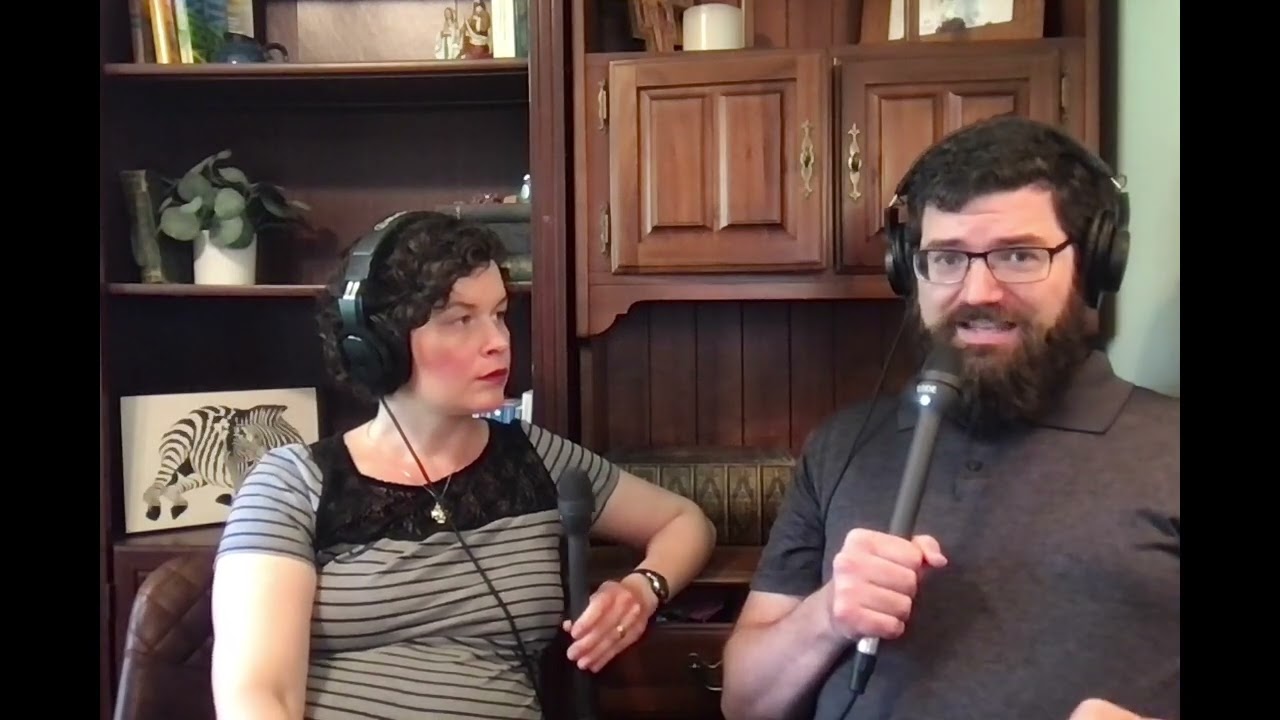
Episode 156 · 25 min · With Joseph and Crystal Gruber
Opting In vs. Opting Out in Evangelization
Take the Our Outpost Quiz
A free four-minute self-assessment for Catholic couples and singles. Tell us who you are, answer a few questions, and get personalized results emailed to you, with at least one way we at Our Outpost can help you answer the call of matrimony.
Take the Quiz →Key takeaways on opt-in and opt-out evangelization
- Opt-in waits; opt-out approaches. An opt-in approach waits for people to come to you; an opt-out approach starts the conversation and leaves people free to walk away.
- Both have a place. Activity fairs and cookie tables are good, but if that is all we do, we are waiting rather than reaching out.
- Be careful with content, generous with persons. We let apps push content at us, yet guard ourselves against our neighbors; it should be the other way around.
- People are eucatastrophes. Borrowing Tolkien’s word, every person is a good, unexpected gift breaking into our lives.
- Opt in to your neighbor. The real question is not only whether they will opt in to us, but whether we will opt in to them.
- Keep the bar high. Better to aim high and miss than to lower expectations so we always succeed.
“What if I opted in to you, my neighbor? What if I see you as an opportunity for a graced encounter?”
Crystal Gruber
Talk about it
Joseph’s challenge:
Where am I waiting for people to come to me?
Who is one neighbor or stranger I could start a conversation with this week?
What would it look like to give someone the chance to opt out rather than never asking?
Chapters
- ~0:00 MIT and Carnegie Mellon
- ~1:15 Opting out at MIT
- ~2:40 Opting in at Carnegie Mellon
- ~4:30 Cookies and conversation
- ~6:25 YouTube vs. TikTok
- ~10:55 Persons vs. content
- ~11:45 Opt-in isn’t enough
- ~13:45 Fear, control and the neighborhood
- ~16:40 The eucatastrophe of a person
- ~19:05 Opting in to your neighbor
- ~21:25 Keep the bar high
- ~23:30 A challenge and closing prayer
Mentioned in this episode
- J.R.R. Tolkien on eucatastrophe, from his essay “On Fairy-Stories”
- FOCUS campus ministry at MIT and Carnegie Mellon
- Our episode on difficulty vs. ease
Full transcript
MIT and Carnegie Mellon
~0:00 Hey, Crystal. Hey, Joseph. Do you want to talk about the difference between Carnegie Mellon University and the Massachusetts Institute of Technology? I guess. I mean, experientially, the experiences that I’ve had. Yeah, let’s do that. Listen in to find out more. Welcome to A Word from Our Outpost, with Joseph and Crystal Gruber — a podcast for Catholic disciples who are wrestling to be missionary-minded in their normal and everyday lives.
In the name of the Father, and of the Son, and of the Holy Spirit. Amen. Direct, O Lord, our actions by Thy holy inspiration, and carry them on by Thy gracious assistance, that every word and work of ours may begin in Thee, and by Thee be happily ended. Amen. In the name of the Father, and of the Son, and of the Holy Spirit.
Amen.
Okay, so you had two different experiences between Carnegie Mellon and MIT, specifically around evangelization. Evangelization. So for background, I was a Catholic missionary on the campus of the Massachusetts Institute of Technology for three years and a Catholic missionary on the campus of Carnegie Mellon University for three years and there was a maybe surprising difference.
I mean there are a lot of differences between the two because they’re two different institutions and they have different goals and I’m not trying to compare them one versus the other as far as which one’s better. That’s up to individual departments, I’m sure. But my experience as a Catholic missionary on those campuses, what we did and what we were allowed to do and why, I think is really interesting because it also pulls in one of the key differences between YouTube and TikTok.
I mean, there are also a lot of differences between YouTube and TikTok, but one of the key differences between those two is very similar to a key difference in my experience as a missionary on those two campuses. And the difference was at MIT, they were fine with us just walking up to people and talking to them and saying, “Hey, would you like to have a conversation about Jesus Christ?
Hey, would you like to have an interesting conversation about religion? Hey, I see you’re eating there. Mind if I have a seat? Would you like to have an interesting conversation about God?” Things like that. They actually were very pro the different religious institutions on that campus in large part because they did see a correlation between involvement in a religious group and like mental health and people actually enduring for the full four years at MIT, which is a hard thing because it’s a very difficult campus to be on as a student.
And there was just a lot more support for different religious activities. And right in the heart of campus, there’s the religious activities building, there’s a chapel where the Blessed Sacrament is reposed, technically in a basement, but in a tabernacle where, you know, we actually had adoration, I think five days a week. Every morning for an hour. So that one,
Opting out at MIT
~1:15 we could walk up to students and initiate a conversation and then they could opt out. They could say, no, thanks. Not interested. Not right now. Really busy. Which would be funny because sometimes they’d have their laptop open and it was clear that they were on social media. And the busy is the relative term, I guess.
So that one, it was a very clear we could approach and then people just were given an opt out. Do you want to continue this conversation? Is this something you have the bandwidth for? Is this an affront to you? And that was something that you guys tried, well, I was there for one of the years, tried to be clear about is giving lots of opportunities to opt out.
So they didn’t feel like forced to stay in this conversation, but to really say, hey, I’m initiating, but you are very free to walk away at any point in time. Yeah. At any point, like not going to be offended. I’m a stranger here. You’re a stranger too. These relationships don’t have to endure longer than this sentence.
That’s fine. Yeah. No offense taken. Yeah.
Opting in at Carnegie Mellon
~2:40 So then you went to Carnegie Mellon. And we were sat down by the person who oversaw the different religious organizations on the campus. And we talked about what we did as Catholic missionaries. This was our first year at Carnegie Mellon. I said, you know, this is what we do. One of the things we do, in addition to studying the Bible with people, in addition to meeting up with people who are interested, is we just go and talk to people and initiate conversation.
And he said, actually, on this campus, we’re going to ask you not to do that. Don’t actually approach students. We’re like, interesting. And he’s like, so what you’re describing is an opt out kind of policy. We want the students to have an opt in kind of policy. So with an opt in policy, we want you to be on campus because we recognize the value of religious organizations.
We don’t want to deny people these opportunities. We’re not saying that you can’t be on campus. What we are saying is that we want the students to choose to engage with you. So if you’re at a table with a sign saying who you are, they can make the choice whether or not to go up and talk with you.
Or you can, you know, have a table outdoors. You can have a table indoors in the student center, weather permitting, I guess. And from that, people can come to you. And so
Cookies and conversation
~4:30 the cookie table was born. Yeah, cookies and conversation. We were reflecting on this the other day that for three years, I made so many chocolate chip cookies because every week we would have a table on campus for a couple of hours. I think like three or four hours we would go in a row.
It was cookies and conversation. It was ask or answer a question, get a cookie. So people could come up to us and ask questions of us as Catholics, a question about, you know, do you really believe in a God that sanctioned this? Do you really believe that? And to be able to answer and talk with them about where they’re coming from.
And if they’re like, oh, you can ask me a question, we would ask, okay, what do you think about God? What do you think about friendship? What is the role of vulnerability in a relationship? And see where the conversation would go from there. And we would talk about having provocative questions based on what we’ve been discussing as a team of missionaries, based on what we’ve been reading, based on what we’ve been praying about.
And there usually would be like a theme to the day that we would engage students with. Things that would be thought provoking, things that would engender hopefully interesting conversation that could lead somewhere. But it was very much students approached us and they opted into that conversation. They’re like, I’m showing up. I see you and I’m going to go to you.
And this, this is
YouTube vs. TikTok
~6:25 the difference between YouTube videos and TikTok. YouTube videos, you see what they are. They have a title. They have a little thumbnail. Sometimes there’s a description that you can see. You can see who it is, who posted it, and then you can click on it. And if you don’t have the autoplay feature on it after the video ends, it ends.
They might have recommended videos, but again, you see who posted it. You see what the title is. You see a thumbnail. You get to opt in to what you’re going to interact with. And TikTok, from what I understand, I don’t have TikTok. I don’t plan on getting TikTok. I know that Instagram has a feature like that.
YouTube actually has a feature somewhat like that. Maybe even Facebook has adopted a feature like this. But the feature that they have is that they show you content that you can then opt out of. You can scroll away from a particular video, but you don’t choose to watch that video ahead of time.
You choose after it’s been presented to you whether you’re going to keep watching that video. And then the algorithm will learn, oh, you watch this video all the way through. You must like this kind of video or you scrolled away from this video. You don’t like this kind of video where you watched it a hundred times.
You probably left your phone running. I don’t know. I don’t know how that would affect your algorithm. And then they’re more likely to show you videos like that in the future if you watched it. And ideally less likely to show videos like that if you didn’t watch it. But in order to know what you like, they just expose you to a lot of things.
And this is one of the, oh, go ahead. Well, I was just going to say, this is an interesting thought experiment for me, because when we talk about things in the context of YouTube versus TikTok, I’m like, oh, I very much prefer this YouTube. I want to be able to opt in. I want to be able to see what I’m potentially exposing myself and choose it.
But when we were on campus, I was annoyed that we couldn’t just talk to people. At Carnegie Mellon University at that time. That we had to figure out a different way to interact with students and that we had to wait for them to come to us. And so it’s this interesting thing thinking about, okay, what does that mean?
And what does that look like? And why do I have these different feelings and these different kinds of circumstances? And also, what does this look like in the church today? Because we have these, you know, a lot of programs are happening at parishes, which are basically opt-in opportunities. And every parish is wondering like, what’s the golden ticket program that’s going to get more people to opt in?
And there is, and it’s like, maybe the golden ticket is like, go and talk to people and see if they’ll just bring them along until they opt out. I don’t know, you know? And so I think this is, it’s just a really fascinating thought experiment to me of these two approaches to being exposed to a thing or an idea or a person.
And in particular, being exposed to the person of Jesus Christ versus other things that we maybe could be exposed to. And also, this consideration of, as I consider, like, why do I consider, have a different initial feeling about your experiences on campus versus experiences with video content on the internet is like, well, there’s a difference between
Persons vs. content
~10:55 how persons interact with other persons versus how persons interact with content and information that’s being thrown at them. And especially in a information overload age, as they say, it’s being cognizant of how I interact with information versus how I interact with persons is important. Yeah. Well, I think it’s a scary thing too, to note that because of my experiences at Carnegie Mellon, I would tell other missionaries on other campuses about this kind of opting in limitation.
And their takeaway was, I’m going to go do cookies and conversations. Right. That was their takeaway. Like, oh, that’s a much better way to approach people. It’s like, no, that’s actually not how to approach people.
Opt-in isn’t enough
~11:45 That’s how to get people to approach you. This video, this podcast, this what we’re doing right now is not to say that there’s nothing good about a table with cookies and conversation. We’re not saying that opt-in strategies are bad. In fact, I prefer them when it’s content. And even with some people, right?
To say like, there should be opt-in opportunities that should exist. The church should have opt-in opportunities. This is why having, you know, signups for different things, having an activities fair at a parish isn’t total nonsense. Because it’s good to let people opt-in. But if that’s all there is, if there’s no, like, I’m here.
I’m presenting myself to you. I’m a person, you’re a person. We’re in a conversation together and it could go anywhere. And there’s a danger to it. There’s a thrill to it. There’s a wildness to it that at Carnegie Mellon, they didn’t want. And I get it. I get why they didn’t want that.
They wanted to protect their students. And I don’t think that that’s actually, I don’t think that is what a college campus is for. But I mean, there are some people who probably are more forceful in approaching people and they thought that we would be. And we’re like, that doesn’t apply to us. But I can see why you would have that as a policy because you might have been burned in the past.
And I think they had been burned. And that is an interesting thing, right? Like, I think people, I mean, this happens in neighborhoods, right? Where people will talk about, oh, well,
Fear, control and the neighborhood
~13:45 back in the day, you know, the kids would just ride their bikes until dark and everybody knew everybody. And you just showed up at so-and-so’s house because you knew that that mom would bake cookies or if you do pizza or whatever. And people will complain that that’s not how neighborhoods are anymore. But then we think, well, why not?
Like, why don’t you just let that happen? It’s like, well, I don’t trust my neighbor to, you know, or what if I have this kind of neighborhood going on? And so now we have fear around what might happen or who’s around us. And so we prefer to have more control and to not be approached and to not have people intruding into our lives because something bad might happen.
And so we set up boundaries or rules on a campus or whatever that become this like protectiveness. And yet we consume material on our phone in a way that’s like super invasive and not protected at all. When in reality, we probably should be super protective about the content and technology of like what we’re consuming using technology and a lot more free with our neighbors and a lot more initially trusting.
I mean, you know, don’t send your kid next to the next door to the stranger who’s a little bit creepy by themselves with a loaf of bread. But like, go with them and stay with them. And like, there’s things you can do to still allow for other people to experience other people in a way that they have to opt out instead of opt in that is prudent.
Right. And with TikTok in particular, this kind of, well, you can opt out. You know, we’ll show you all sorts of different things, but you can opt out. One of the bigger complaints about TikTok is that it’s exposing people in general and children in particular, but it’s not like the content becomes better because you’re older, that they’re being shown sexually suggestive material, they’re shown perverse material, they’re shown drug related paraphernalia and they’re shown like nihilistic, atheistic, materialistic nonsense that is catastrophic in the appropriate sense of the word, that they’re showing things that are leading to the dissolution of society and it’s catastrophic versus people who are living their faith joyfully who might go and present themselves to a neighbor, to a stranger, to someone around them.
Right.
The eucatastrophe of a person
~16:40 Tolkien has this notion, like the world is filled with catastrophe and tragedy. The world, it’s a sad place where things die and things come to an end. And in this world, something happened that was like a catastrophe, but good. And he called it a eucatastrophe. The “eu” at the beginning is Greek for good, the good catastrophe.
And that’s what we are as human beings. We are made in the image and likeness of God. When we show up in front of someone, they are a eucatastrophe. They are a piece of goodness exploding into our lives and we are a piece of goodness exploding into their lives. And that’s the nature of a gift, is that it’s coming to you unearned and oftentimes even unexpected, but it’s there and we are here.
And the Catholic Church in the United States has this sort of, well, people can opt in. And then they don’t say, well, what if we just came out into the world and said, well, you can opt out, but we’re here. This is a real option. This is a real thing. This is real joy.
This is real life. This is real love. Okay, so we just recorded the podcast on difficultness versus easiness, which will probably have been posted a week or two before this gets aired. It’s occurring to me that it is easier to just scroll TikTok and to just sit in the parish center and wait for people to come to you.
It is a harder thing to put down your phone and go love your neighbor. And so in the end, we’re allowing the garbage of the world to evangelize the world in a way because they’ve got algorithms and technology to set it up. And for us to have that same kind of boldness, frankly, is a harder, more difficult thing for us.
And so would that we, as Catholic Christians, be bolder and more audacious than TikTok? Yeah, and
Opting in to your neighbor
~19:05 flip it actually, flip the whole thing around and say, what if I opted in to you, my neighbor? What if I opted into you, the stranger? What if I see you as an opportunity for a graced encounter? What if I actually have agency here? What if I get to choose to love somebody today and choose to encounter them in a new way today?
And to not be afraid of it. I think whenever I think about this, I’m like, oh, well, if I choose to love my neighbor, then I’m going to have to have time and energy and they’re going to be okay. People are so energy sucking for you, especially, right? Yeah, like lies, all lies.
But then I think about like, we’ve been trying to have dinner with one of our neighbors. It’s just at this point, it’s like hilarious. I’m like, oh, how about in three more weeks? No, okay, now we’re all sick. Okay, how about like, it’s going to take us two, three months just to have one dinner.
This isn’t even, which is a year after the first dinner, which, you know, so we make these things into such a bigger deal in our head than it needs to be to just reach out to somebody. And to opt in, to say, I’m in. I am willing to see where this might go.
And to say like, every person we’ve ever come across is an opportunity to encounter someone made in the image and likeness of God. That it’s not just, oh, will they opt in to me? The question is also, am I going to opt in to them? Yeah. Am I willing to enter into a eucatastrophe?
Yeah. Am I willing to let them be a eucatastrophe that derails part of my life in the best possible way? Awesome, yeah. Did you want to bring in the other story about how
Keep the bar high
~21:25 even when people opt in? Oh, yeah, I heard a story recently where somebody had opted in and there are like certain formalities in this particular opting-in situation. You can say, you can say it. No, maybe you shouldn’t. I’m not going to. Okay. And the bar was set really high. And then afterwards, people approached them and were like, oh, don’t worry about that bar.
We have this lower bar over here. And it’s like, whoa, whoa, whoa, whoa, whoa, whoa. It was a Catholic organization that somebody decided to join. And they set the bar really high in the joining. And then after he joined, they said, we don’t actually have that high of a bar. You can opt out.
These were optional. And it’s like, no, keep the bar high. Come on, people. How are we going to, oh, we got to set the bar high and we got to aim for it. And if it’s a swing and a miss, it’s a swing and a miss, but that’s better than lowering the bar so that we’re hitting it all the time.
You mixed metaphors there. I did. I really did. Yeah. Really okay with it. Was it? Yes. You didn’t play baseball growing up, did you? No. Okay. I’m imagining swinging at the bar. What? Yeah. Because if it’s high and you swing the bat and you’re just like, There’s still a bat though. There’s still a bat in your image.
I made up a whole different game that doesn’t exist to bring these things together. Okay. So it wasn’t a mixed metaphor. You literally created a new game. New games to make my metaphor work. Okay. So with that,
A challenge and closing prayer
~23:30 we like to end with a challenge. I’m going to wrap things up with a challenge here. Dear listener, the bar is high. Your neighbor’s souls are at stake and it is a scary thing. It could be a eucatastrophe for you to give somebody the opportunity to have to opt out of encountering our Lord and Savior Jesus Christ through encountering you.
I challenge you, dear listener, to give it a try. Go meet a stranger. Go introduce yourself to a neighbor and see how it goes. I really want to hear about it at [email protected]. If we post this video that we recorded, we’ll see, then you could comment in the comments on the YouTube.
If we make a YouTube, we’ll see. Anyways, and with that, I’m going to pray this out. In the name of the Father, and of the Son, and of the Holy Spirit, amen. Heavenly Father, thank you for breaking into our lives, for helping us to encounter you in such a way that we need to say yes or no to you every day.
And I pray for our listeners that they would have the courage to bring you to their neighbor. Let me ask all this in your holy name. Amen. In the name of the Father, and of the Son, and of the Holy Spirit. Amen. From Our Outpost to yours. Thanks for listening, and a special thanks to JohnMarc Skoch.
That’s S-K-O-C-H. For the music. Check him out on Spotify.
Keep listening
Share this episode
Know someone in parish ministry wondering how to reach more people? Share this episode.