
What did St. Paul believe at the very core? Joseph’s uncle, a Catholic anthropologist, returns to unpack the Creed of Saint Paul in 1 Corinthians 15: a creed Paul received and handed on, older than his letter, anchored in Peter, and centered on Christ who died for our sins and rose on the third day in accordance with the Scriptures.
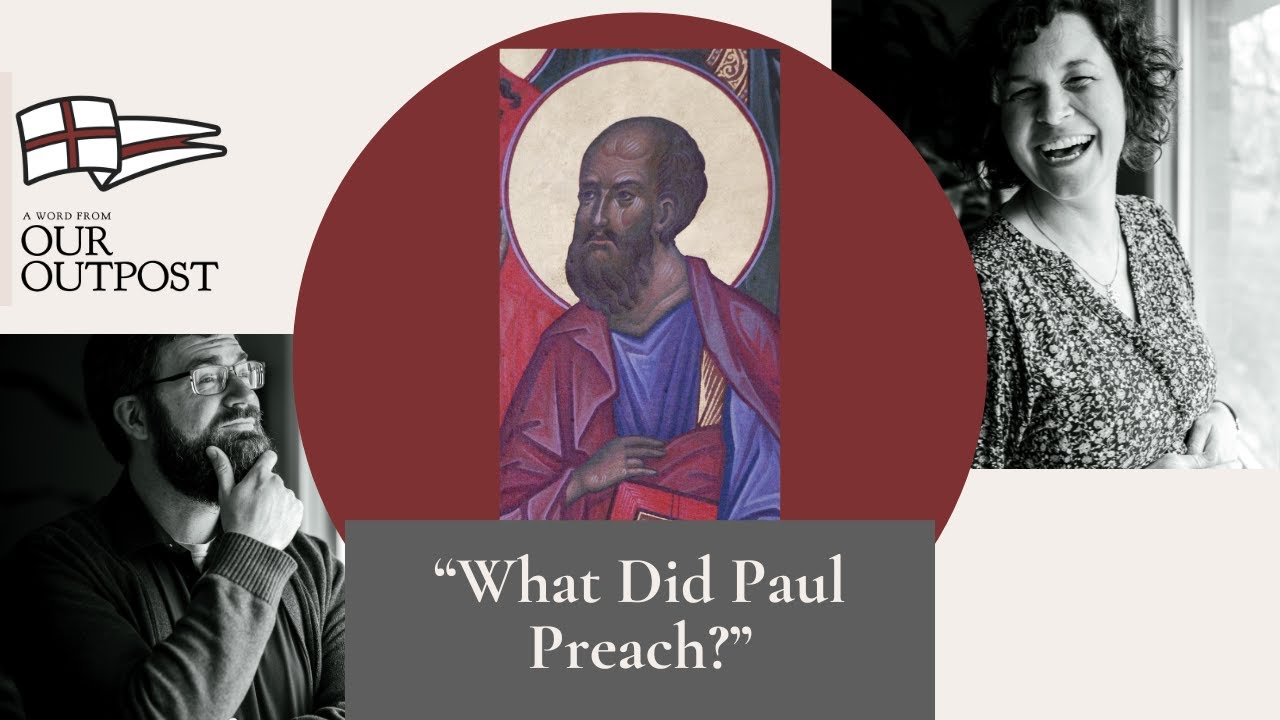
Episode 183 · 43 min · With Joseph and Crystal Gruber and Joseph’s uncle
The Creed of Saint Paul: An Avuncular Episode
Take the Our Outpost Quiz
A free four-minute self-assessment for Catholic couples and singles. Tell us who you are, answer a few questions, and get personalized results emailed to you, with at least one way we at Our Outpost can help you answer the call of matrimony.
Take the Quiz →Key takeaways on Creed of Saint Paul
- The creed is older than Paul’s letter. Writing around 55 AD, Paul reminds the Corinthians of what he preached on his visit and what he himself received. That takes us back to the church in Jerusalem, very close to the lifetime of Jesus.
- Peter is its anchor. Peter told Jesus who he is in Matthew 16, and Jesus told Peter who he is. The creed says the risen Christ appeared first to Cephas, and Paul says it was Peter in Jerusalem who confirmed what he had met on the road to Damascus.
- We are being saved by it now. The gospel Paul preached is essential, saving and ongoing. It works among and between believers, in marriages, families and the covenant community, not only inside the individual soul.
- Christ died for our sins in accordance with the Scriptures. The blood of the temple sacrifices pointed to a sacrifice that could actually remit sin. The death of Jesus fulfills them, is re-presented in the Eucharist, and restores our bond with God and with one another.
- Paul met the body of Christ before he met Christ. Jesus told Saul that he was the one being persecuted. Often someone praying for us, loving us and forgiving us is showing us Jesus long before we recognize him.
“When Paul met Jesus, he discovered he already knew him.”
Joseph’s uncle
Sit with this in prayer
Two questions to bring to the Lord this week.
Who showed me the face of Jesus before I recognized him?
Where is Christ’s death and resurrection at work in my marriage and family right now?
Chapters
- 0:00 Should we have your uncle on again?
- 0:18 Opening prayer and welcome
- 1:40 A creed Paul didn’t originate
- 3:37 Peter and the mirror
- 6:11 An older creed inside 1 Corinthians 15
- 8:44 “Brothers, I want to remind you”
- 11:09 You stand firm in it
- 13:16 Saved together, not alone
- 17:32 Christ died for our sins
- 18:01 Blood that could remit sin
- 20:09 Paul’s reversal on the cross
- 22:11 Restoring the bond
- 24:42 Poured out for many
- 28:18 He appeared to Cephas
- 28:48 Paul met the body before he met Christ
- 32:56 Five hundred witnesses
- 36:48 Community, marriage and a new thing
- 41:47 Closing prayer
Mentioned in this episode
- 1 Corinthians 15:1–8, the creed Paul received and handed on
- Matthew 16:13–19, Acts 9 and Isaiah 53
- Genesis 2:24, a man shall leave his father and mother
- The Our Outpost Quiz, four minutes for Catholic couples and singles
Full transcript
Should we have your uncle on again?
0:00 Hey, Joseph. Hey, Crystal. Should we have your uncle on again? Only if he’s going to talk about the Creed of St. Paul. Well, listen in to find out more. Oh, before we cut to the intro music, maybe we should tell people to rate and review and like and share this podcast. This is going to be a good one. I agree.
Opening prayer and welcome
0:18 Welcome to A Word from Our Outpost, with Joseph and Crystal Gruber — a podcast for Catholic disciples who are wrestling to be missionary-minded in their normal and everyday lives. In the name of the Father, and of the Son, and of the Holy Spirit.
Amen. Direct, O Lord, our actions by Thy holy inspiration, and carry them on by Thy gracious assistance, that every word and work of ours may begin in Thee, and by Thee be happily ended. Amen. In the name of the Father, and of the Son, and of the Holy Spirit.
Amen. Hello, Joseph. Hello, Crystal. Hello, Uncle. Great to have you back. We got, I got a couple of text messages from the last podcast that we recorded with you. Your uncle’s so cool. I’m really enjoying this. So we’re excited to do another recording with you.
Delighted. Delighted. So shall we launch in or? Oh, yeah. Yeah. We’re going to be talking about the Creed of St. Paul, which I’m very excited to dig into. And right before we pressed record, you told us to your uncle that the name that you gave for this episode is itself a misnomer, because this is not exactly St. Paul’s Creed originally.
But that is getting ahead of ourselves. What do we mean by the Creed of St. Paul? Take it away, dear uncle. Thank you.
A creed Paul didn’t originate
1:40 So it is a, I think what is the expression nowadays when something on YouTube is not congenial with all the censors, it lacks context, it’s not false. It is the creed that St. Paul promoted, but it’s not the one he originated, and that’s important because if it were simply the creed that St. Paul originated, that would be astonishing because that would take us right back to say the year 50 or so, 55 A.D., very, very close to the lifetime of Jesus.
So one could say, well, that would make St. Paul perhaps the founder of Christianity or at least the founder of Christian theology, but this was his creed. But it’s only his creed insofar as he popularized it, shall we say, published it and promoted it well beyond the church in Jerusalem or among the church of the Jewish Christians of the first decades of the Christian era.
It’s his creed in that sense. He gave it, I guess, his widest audience, but it’s not his originally, so that’s even far more exciting. That means that someone before St. Paul, before his conversion, was promoting this creed, and based upon the evidence of the Pauline epistles, the people who were promoting were people like James, brother of the Lord so-called, and John, and Peter.
This creed, as we shall see, has Peter as its anchor, as its founder, and this would in a certain sense, a creed which places St. Peter and the Petrine office at the heart of the foundation of the church, which, by the way, is what Jesus himself is quoted to have said in the 16th chapter of St. Matthew on this rock, Peter came out while I built my church, specifically in terms of Peter’s capacity to pronounce on who Jesus is.
Peter and the mirror
3:37 You may recall the text from Matthew’s Gospel. Jesus asks his disciples, who do people in general say he is, and they give general answers. But when he turns to them and says, who do you say that I am, there must be a kind of a pause.
Finally, just Peter, not all the disciples, just Peter, answers for all of them. He says, well, you are the Christ, you are the Son of God. That recognition of who Jesus is, from the lips of Peter, gives Jesus a special capacity to recognize who Peter is, and he mirrors back to him.
Well, you know who I am now, and I’m going to tell you who you are, because you didn’t tell me who I am, I can tell you who you are. This is how fundamental existential relationships work. Each one holds a mirror to the other.
Sometimes it’s a flattering mirror, sometimes it’s a circus mirror, sometimes it’s a broken mirror. But we hold mirrors to each other in friendship, in marriage, in family life, and it’s all kinds of joy and sorrow go with that.
But Peter holds a mirror up to Jesus in a moment, in a critical moment, in a moment in which Peter can hold that mirror up to him and say, this is who you are. And then Peter holds up a mirror to Peter and says, this is who you are.
And who Peter is, he’s someone who teaches who Jesus is. He’s someone who can do this for others. He spoke up on behalf of the 11 other apostles, and henceforth, Peter would speak up on behalf of all the disciples of Jesus. And basically hold within his faculty, his office, the power to speak authoritatively about Jesus.
So that is the revelation of who Peter is, as given by Jesus in Matthew’s Gospel. But St. Paul has his own variation of this interpretation, of this message of Jesus. And that is his creed. So apparently Peter had great stock in this, and the disciples took great stock in this declaration of who he is.
And so from the time Jesus spoke it, for the next two or three decades, to the time that Paul was repeating it in his own words, we have a creed, with a fundamental statement of how to understand who Jesus is and who can tell us who Jesus is, and what is essential to who Jesus is.
An older creed inside 1 Corinthians 15
6:11 So in order to understand that creed, then we would turn to the first letter of St. Paul to the Corinthians, chapter 15. Now St. Paul might have wrote this letter, might have written this letter 55 AD. So we are 20 years or so from the death and resurrection of Jesus.
Or we are just, say, 17 or 16 years from the conversion of St. Paul. So this is a relatively early letter. It’s one of the first documents in the New Testament, as we have received it.
But in the 15th chapter of this early letter, St. Paul is, by all scholarly interpretation, St. Paul is actually citing an older document. This is an embedded chapter, which is older than the first letter of St. Paul to the Corinthians. St. Paul has enveloped it into the epistle.
So something much older, or something at least significantly older than 55 AD is already here. And then we’ll see from the citation itself as we read it, that the citation itself reflects to an earlier time than when it was first written or first communicated broadly and roundly in the church.
So now we’ve gotten far, far back. This is why I say it’s a church’s creed from virtually the beginning. So if I may, or if you would like to read from the first letter of St. Paul to the Corinthians, chapter 15, the first five or six verses, I suppose I will put them, or this launch out.
These two. These two. St. Paul writes. Brothers. And by the way, he wrote brothers. He didn’t write brothers and sisters, no offense, Crystal, and no offense to any lady folk. This is a letter he wrote to the elders of the church of Corinth, like almost all of his letters.
And so the first eyes to read it were the elders of the church. We would call presbyters, priests, and deacons of the church, or the apostles, the apostolic rule of bishop. So brothers. And they would teach from this document.
When we say brothers and sisters, we are implying that this document was simply read as instruction to a classroom, rather than it being a liturgical instruction given in the assembly. All right, but never mind.
“Brothers, I want to remind you”
8:44 Brothers, I want to remind you of the gospel I preached to you, which you received and in which you stand firm. So as I said, the text already implies it has an earlier predecessor. I want to remind you. So Paul said, in this epistle, I’m not telling you something new.
I’m telling you something that we spoke about when I last visited you. Oh, well, now we’re back into the 40s AD. This letter is significantly post his missionary journey to Corinth. So now we’re back to the 40s. So this is already a leap backward.
I want to remind you of the gospel. And this is the first time in the literature of the New Testament that the gospel, the word gospel, is used. So this good news, this broadcast of something essential, is embedded here as the first declaration of this.
We know that this word will become the word to describe the entire proclamation of Jesus Christ from conception, birth, early life, ministry, passion, death, resurrection, and post-resurrection. We know all of these events in the lifetime of Jesus are now meant by the word gospel to us.
But in the first instance it’s used, it has a much more specific and I would say narrow application. This is now the kernel of the gospel, this first use of it. I doubt that St. Paul invented the word gospel in this case and I would apply the word creed here.
I want to remind you of the creed that was proclaimed from the beginning, the one he’s going to say that he himself had heard and he told them when he traveled to Corinth. That will be the sentence.
So now we’re dealing with something which from St. Paul’s estimation is genuinely apostolic, is genuinely embedded in the lifetime and the experience of the apostles of Jesus Christ and their relationship to Jesus Christ.
It’s not something that developed 10 minutes later outside of that relationship that they had with the historical Jesus, it’s something that was generated from within their bond to the historical Jesus whose words and deeds in their presence. I want to remind you of the gospel that I preach and in which you stand firm.
You stand firm in it
11:09 By the way, it’s not peripheral, it’s not secondary or tertiary to the religious life or the Christian life. You stand firm in it, it’s essential. This is basically a foundation for what will become the Church of Martyrs. How firm do you stand in it?
Quite firm. You won’t give it up under any condition. You will suffer for it. Some of you will die for it. You stand firm in it. So this is not to be compromised, it’s not negotiable, it’s essential.
See what you stand firm, you are being saved by it at this very moment if you hold fast to it as I preached it to you. So not only is it essential and operative, it is salvific. This is the gospel which saves.
Not to have this gospel is to step outside of the assurance of salvation that Christ gives us. The Church provides sacramentally or that by grace and faith we accept personally. It’s operative, the most operative.
I suppose there can be a Christianity with the soul which is on its way to hell, a kind of Christian theology without transformation or conversion. But if there is a Christianity which has conversion and transformation and redemption, this is the one. This is the one which is saving.
I’m not interested so much in being theologically correct and going to hell. I’m interested in being theologically correct and being saved, and that’s what this gospel is. I think there are others who have alternative opinions, but I won’t conflict with them at this moment.
You are being saved by it, powerful, you are being saved by it at this very moment. By the way, that implies ongoing salvation, not one and done, but an ongoing process. You are being saved by this. This creed is not just a theological dictum, it’s not just a stale doctrine.
It’s an operative, transformative, and dynamic process inside the heart and mind and soul of believers.
Saved together, not alone
13:16 I would like to say something that we often neglect. It’s an operative engine of Christianity amongst and between believers. For instance, you all talk about marriage a lot in your podcast. I was surveying them. This is something which is operative between husbands and wives.
We are so strongly stressed, grace interior, and belief internal, and transformation of the soul. We are so strongly stressed this, it’s our Western cultural prejudice, we have too long neglected that the idea of covenant, the saving covenant, is amongst and between us.
One of the great weaknesses of all English translations of the Bible is that the English language does not have a division between the singular second person and the plural second person. It’s such a grave weakness, mind you.
My dear uncle, I would like to say I am a very big proponent of bringing back the these and the thies and the those. Absolutely. It really does help.
So often Jesus is speaking to them that it looks like he might be speaking just to one or the other of each one of them, or any one of them, and that’s a problem, because sometimes Jesus is really compelling, a marriage, a family, an assembly, a community, a church.
He’s commanding and commending them, and each one says, oh, this is to me by itself, and so we end up with this sort of evangelical Protestant idea of me and Jesus, Jesus my own.
Yes, I mean, at the lowest moment, the hardest, harshest moment of the Paschal history, we might feel to be alone, as Jesus was in some dramatic way, most alone on the cross. But that is the darkest, harshest, saddest moment of the Christian process of conversion.
By and large, we are grateful to Jesus for having done that, and we ask not to be put to the test. We are saved, generally speaking, in bonds, even sometimes bonds which have the edges of bondage.
We are saved, the Paschal mystery of carrying the cross amongst and with each other communally, in a family way, in a marital way. We are saved in a covenant community. And St. Paul talks about being saved this way, by fellowship, by membership. We identify with the group, and the group identifies itself with us.
That’s a saving grace. So anyways, I just wanted to emphasize that, that we wish that we had, no, in Pittsburgh, you have or used to have, used to be at Pittsburgh, the plural for you was yearns.
I’m now in a southern climate just now, and we do say y’all a lot when we are talking to, because it’s a weakness in our language. We have to invent these idioms to overcome the weakness. But the and that would be a much better overcoming, shall we say.
All right, it is operative. So here we are. You are being saved by it at this very moment if you hold fast to it, as I preached it to you. So homiletics, you’re not supposed to preach anything other than that which was given to you to preach.
We’re not supposed to be inventive and original. We are supposed to be very clever in the presentation to adapt and adjust it to the audience, but we’re not supposed to change it. St. Paul received it, he said, and I’m giving it to you just as I did receive it.
All right. Otherwise, St. Paul writes, you have believed in vain. I hand it on to you, first of all, what I myself received. Again, homiletics, I hand it on to you what I received. First of all, what I received, but something second day or tertiary peripheral. I hand it on first of all, what I received.
Christ died for our sins
17:32 And here we are in the creed, Christ died for our sins in accordance with the Scriptures, that’s it, that Christ died for our sins in accordance with the Scriptures. Now, all of us will die, but only one of us died for sins. The death of Jesus is a unique passage which creates the forgiveness of sin.
Blood that could remit sin
18:01 In the Torah, in the Old Testament, animals were slaughtered in the temple, the blood was sprinkled for the remission of sin. But it is easily said and said by disbelievers as well as by New Testament believers, how does the blood of animals remit sin?
It must be a kind of promissory outpouring of blood for the remission of sin. There must be something that it stands for, that it represents, which is significant for the possibility of the forgiveness of sin. So the blood of rams and sheep and bulls was significance filled with signs, but in and of itself could not remit.
God could remit sin. But was there a sacrifice that God could give us for the remission of sins? Yes. In the Catholic experience, that sacrifice is the Eucharistic sacrifice in which the death of Jesus, the blood of Jesus, is presented again, re-presented. You say it’s strong, not even represented.
Re-present the beard. As St. Paul says, you are being saved by it. Not something which once saved you there and then, but is saving you here and now. If you accept what I preached the way I taught it, and you are present in the assembly as it proclaims it and liturgically celebrates it, Jesus Christ died for our sins in accordance with the Scripture.
St. Paul adds it. It is not something which is a novelty that God pulls out of a hat in the year 30 AD. In accordance with the entire liturgical and Eucharistic tradition, worship tradition of Israel from the time of Abraham to the time of Moses and David and Elijah and John the Baptist, it’s all being fulfilled in the death of Jesus.
The death of Jesus, then, for St. Paul is cosmic and has epic universal significance. It would have seemed to St. Paul before his conversion, one more tragic moment of illusory life spilled out, poured out needlessly and tragically.
Paul’s reversal on the cross
20:09 When he heard of the cross of Jesus before his conversion, he was furious because the people from whom he heard it said that Jesus was the Messiah. And that would have meant the Messianic work of God, the future coming kingdom of God was crushed by a Roman cross, by the humiliation of a Roman imperial presence, by what St. Paul would have otherwise regarded as illegal and illicit kind of Roman interference in the covenant people’s faith.
Couldn’t accept that it was angering to St. Paul, infuriating to St. Paul, and he tried to crush what he regarded as the unspeakable heresy of the death of Jesus being saving for believers. But now he says, no, I’ve inverted. I reversed it.
The death of Jesus, the cross of Jesus is the heart of the sacrifice, of the sacrifice was saved. Now, remind you, Paul was an observant Jew. He had gone to the temple and prayed to the temple all his life. And he believed in those sacrifices.
He believed in the outpouring of blood for the remission of sins and for the binding of the covenant people of Israel to God, for the binding of the people of Israel to one another. He believed in that, but now he believes in the blood of Jesus doing all of that.
So as he’s written in the letter to the Hebrews, those former things are passing away, hadn’t passed away yet. When the letter of Hebrews was written, the temple must still have been standing.
Those rights must still have been operated, but it was passing away because there was a better, finer outpouring of blood, which could actually do what these other ones had signified. This is the essential creed. This is the beginning of it. Christ has died for our sins.
We say that so easily. Christ died for your sins. It rolls off our tongue. It’s one of the most axiomatic teachings or sayings of the church. Even non-believers somehow know they’ve heard it. Christ died for your sins. Yeah.
Restoring the bond
22:11 Well, so what does that even mean? It means that our sins are forgiven, which means that we are bounded back to God, the sin which divided, which separated, is now deprived of that power, and we are reunited to God. That’s what the remission of sin means.
It’s not just that a stain is purged from our soul, but a bond is reestablished. Those who have been alienated and divorced and broken from God are now restored to God, adopted back to God, espoused by God. The forgiveness of sin is also the restoration of relationships in the covenant community.
Again, husbands and wives, parents and children, friends, and fellow believers, the remission of sin restores the bond. If the bond was entirely broken, it restores the bond. If the bond was stretched and strained, it relaxes and relieves the bond of that which is otherwise death-dealing and crushing to it.
But the death of Jesus Christ does this. If one accepts it the way St. Paul proclaims it, so ah, so there’s a great deal in that for receiving it as it was proclaimed, so obviously, what he proclaimed was that we are going to have to die with Christ, in Christ.
The death of Christ is going to have to be operative in us. Jesus said, take up your cross and follow me. So make your sacrifices accordingly. Or in the Lenten season when this podcast is being recorded, and it’s very much to the point that we are praying these days, the stations of the cross, so we are praying that sorrowful mysteries of the rosary, or we are remembering the seven last words of Jesus.
There are so many ways over the Mercy Chaplet, so many ways in which the blood of Christ is operative in the devotional and quasi-liturgical and liturgical life of the Eucharistic Church. This is how St. Paul proclaimed it. This is how we are receiving it.
We receive it, but first of all, and most of all, sacramentally, Eucharistically. And then from that, it flows out like the blood of sacrifices are supposed to. It flows out into the rest of our lives. So let me just continue reading.
Christ died for our sins in accordance with the scriptures that he was buried and in accordance with the scriptures rose on the third day. So very important, it’s like a litany, in accordance with the scriptures, in accordance with the scriptures.
Poured out for many
24:42 You might remember that in the former translation of the Eucharistic canon, the priest said that Christ’s blood was poured out for us all and our salvation. But in the newer and much better translation, we revert back to the original. Christ died for us and for the salvation of many.
The blood is poured out for many. Why many? Didn’t he give it up? Yeah, he gave himself for all, but the word many is what is taken from Isaiah, the prophet, when Isaiah described the suffering servants and his sacrifice for many.
And so the Eucharistic canon wants to preserve the link of the Eucharistic sacrifice to the Old Testament. To the Torah, St. Paul was trying to do the same in fulfillment of the scriptures, in fulfillment, the covenant of Israel from Abraham to Moses to David and Elijah.
That covenant is exactly the same covenant, which has now come to perfect fruition, not just for the Jews, but for the Greek in the death and resurrection of Jesus.
So everything which was in a certain sense given to Jewry by the entire Old Testament, by the whole Torah, all the prophets, all the miracles, all the wonders, and especially the Exodus, all of that comes to us in Jesus Christ. And more than that, the Sabbath itself, the temple itself comes to us in Jesus.
All of this reconciles God and man, and man to man, the human community. All of this is operative in the Paschal mystery of Jesus. This is the gospel. This is the creed that St. Paul preached. He doesn’t speak a word about the birth of Jesus or his earthly mission or ministry.
There’s hardly a quotation of Jesus in the whole Pauline corpus of letters. Where St. Paul, the whole thing is here. He died and he rose. The resurrection of Jesus is a new creation.
And those who have shared with him his death, who have availed themselves to his forgiveness are now sharers in the glory that he has at his father’s side. That’s his exalted there in the father’s presence. We share in the intimacy of the father and the son.
It’s a Trinitarian creed. It’s a Trinitarian mystery. We who have shared his passion and his death by our repentance and by our mortifications and by making all of our troubles pray in faith, we who share the cross of Jesus Christ are likewise sharers of his glory.
That is to say, sharers of his bond with the eternal father, where he sits at the father’s side. So the intimacy of man to God is in the wounds of Christ. Christ, by his suffering, made himself one with us in humiliation, dying, suffering and death.
All of our pains are his pains. That’s what he can heal because he’s investing himself, embedding himself in human suffering. So now human suffering is dear to God and intimate to God. Human suffering is now part of the province of God’s covenant with us.
He’s redeemed suffering and made it part of the bond. Suffering would choose to separate us from God. Now the cross of Jesus has made something to knit us back to God, to combine us back into God’s safe and work. And then he rose from the dead, meaning that we are transformed.
Those of us who belong to him and his suffering, now he belongs to us in our worship. This is again, this is the creed of Christ and it has all these layering because of course it must. This is what leads to the church’s life, which follows.
He died before our sins, was raised after the court of the scriptures on the third day and here we go.
He appeared to Cephas
28:18 And that he was seen first by Cephas, by Cephas, first by Cephas, which means the rock. St. Paul now remembers that exact term that Jesus gave to Peter in Matthew’s gospel. You are Cephas and on this rock will I build my church. So where is this creed founded?
First from Cephas, not just from Cephas’ own voice, but from Jesus’ voice, he gives it to Peter. Peter gives it to Paul.
Paul met the body before he met Christ
28:48 Remember the conversion story of St. Paul. He had seen Jesus burst of light on the road to Damascus and was blinded by that light. And then he heard the voice, Paul, or he said, Saul, Saul, why do you persecute me? Who are you, sir?
No, you say I persecute you, he answered. And Jesus said, well, I am Jesus of Nazareth. By the way, not the cosmic Christ, Jesus of Nazareth. I’m from a place in Israel, Jesus of Nazareth. I am Jesus of Nazareth, whom you persecute. Well, this is a thunderclap indeed.
Jesus of Nazareth was dead as far as Paul had known. Now he’s alive and speaking to him. And then even more shocking, Jesus of Nazareth identifies himself with all the people that Saul was persecuting. In other words, when Paul first met Jesus, he found out he had already met him earlier.
I’ve had that experience once or twice. I think I have a cat. When Paul met Jesus, when Paul met Jesus, he discovered he already knew him. How did he know him? He knew him in the faces and voices of all those people he made to suffer.
He asked these people to deny Christ. He asked them to reject Christ. He persecuted them to death. And now he realized Jesus himself was in their face and from their voice.
Again, that’s a wonderful lesson to learn in case of family life, in case of working in the church, the people who are most suffering are exhibiting to us Jesus Christ. Even those we are most persecuting are oftentimes delivering to us the message of Jesus Christ.
This was Paul’s dramatic experience. And so now Paul realized from the moment he met Jesus, that Jesus identified with his church, he identified with his body. No surprise that Saint Paul’s big lesson through many of his epistles is this, that we are the what?
The body of Christ. Because he met the body of Christ before he met Christ. And that’s often how it goes. We think we meet Jesus and then Jesus introduces us to the church. No, somebody is praying for us. Somebody is loving us. Someone is forgiving us.
Someone is patient with us. Someone is proclaiming Jesus to us, whether we know it or not. We are rejecting the Jesus they proclaim, and yet somehow Jesus is insinuating himself deeper and deeper into our soul until finally there’s a breakthrough and we realize it’s Jesus of Nazareth.
And then for foolish, we think it’s just me and Jesus. No, it was always Jesus in the community, Jesus and the bond, Jesus and the brother, Jesus and the sister. It was always that bond which made Christ Jesus present.
So when Paul recognized Jesus alive and the suffering members of his body, he began to realize just how important suffering Jesus was. We are told in the other letters of St. Paul that shortly after that he went to Jerusalem and he met Peter, Cephas, and Peter explained to him what all this meant.
So whatever the troubles between Peter and Paul in terms of human chemistry, and they had their troubles, by the way, it’s marvelous to watch and read between the lines of the New Testament. They are typical guys with their own little ambitions and little sharp edges.
And yet at the critical moment, at the moment of the deliverance of the creed, St. Paul says, it was Peter, it was Cephas who straightened me out and explained to me what had happened to me on the road. I had this intuition when I met Jesus, but when I went to Jerusalem, it was confirmed.
He said, everything was confirmed. This is in fact Jesus of Nazareth. And so this is what I mean by the church’s first creed. It is something which is promoted by the magisterium and something which is operative in the assembly and something which introduces us to Jesus Christ and connects us to the Trinity. It was seen by Cephas and then by the 12.
Five hundred witnesses
32:56 And after that, he was seen by 500 brothers at once. I wonder if we’re all in one place at one time or 500 people in various numberings in several places, all Jesus, more or less in the same day, perhaps having the new Eucharistic assembly, doing as Jesus had told them to do.
But Jesus was seen. They were beginning to realize it was Jesus. They were seen after all. By 500 brothers at once, most of whom are still alive, though some have fallen asleep. There you have it. This is the great credential of this creed.
This is no longer a creed which is abstract theology in a book on a shelf. The witnesses are still alive. St. Paul can’t really say this if it’s not true. This can’t be read in an assembly and people stand up and say, I’m still alive and I don’t know anything about this.
There are lots of people who are alive in 55 AD who knew all about this. So this echoes off the walls of the earliest church, not just the early church, the earliest church sprung from the side of the wounded suffering Christ.
So that’s what I mean when I say that we have the creed of St. Paul and you’re also right that it even precedes St. Paul. And so that’s what I hope to present you as a foundational document of the church’s life. Thank you.
You’re quite right. Quite a few Bible scholars lately, even some of the more skeptical ones, are acknowledging that this and a few parallel passages to it indicate that the resurrection of Jesus was not a contrived story of abstract philosophy that the church came up with decades later.
But from the very beginning, even those, even those scholars who don’t believe in Christianity per se, now all admit, all creditable ones, that the earliest disciples believed they had indeed seen the risen Jesus. That’s clear.
And that St. Paul himself was the last of the brethren, seen last of all by me, St. Paul says in this passage, seen last of all by me, St. Paul on the road to Damascus also saw Jesus, the same one that was seen by the apostles when Christ rose, which was the same one that the apostles knew in his earthly ministry.
So this, this essential creed is a, is a deep connecting link between the risen Christ and the suffering church, a deep connected link between Christ Jesus and glory and the earthly life of Jesus and a deep connecting link between the Christian dispensation and the Torah, the Old Testament.
This is, so this is an essential creed. It also, of course, involves things like the divinity of Christ, because linking all of this together is a work of God, profoundly only God can do. That blood could be redemptive and not just figuratively so, but actually so is a divine power.
And as far as that Christ, Jesus can unite us to God in his body. The Christ could be present to all the members of his body at once. This is a divine power.
So hidden in this is a Trinitarian statement and later creeds that we know of like Nicene and so apostles we will emphasize the Trinitarian aspects, the original one emphasized the Paschal aspect, because in the Paschal mystery, the death and resurrection of Jesus, the Holy Trinity and the covenant life is being revealed.
Community, marriage and a new thing
36:48 Do you have any words to say, Joseph? Well, I think this accords well with a sense that we’ve had over the years, we were Catholic missionaries for a number of years.
And one of the things we realized was that one of the most evangelical things we had to offer was an example of not just a believer, but a community of believers, that that was actually more significant.
So like I could witness a changed life, but if I could witness that by being part of a community that has been changed and is being changed, that that was actually the most significant thing.
And I think most of the time when we’re talking about evangelization today, evangelization has become something of a buzzword, you may have noticed, it is almost always about personal testimony, it’s almost always about personal proclamation of the gospel.
And very rarely do we hear this sense that the revelation of Christ is a communal revelation, which is one of the reasons why we got into the marriage ministry business, dear Uncle, because we think that the bond of marriage is an evangelical sign and one worth encouraging and fostering.
The Christian bond of marriage, yes, without Christ, explicitly or at least implicitly present, I believe he may be implicitly present in people who don’t know yet who Jesus is, but as a Christian who have the additional aid of knowing his name and his mission and his ministry, your marriage circles upward, it aims toward the Trinitarian life and the Trinitarian life inspires and animates it.
Without Christ, it circles downward, the drain, God made already the birds of the air, the fish of the sea and the creeping things, he already made the male and female and told them to be fertile and multiply.
So when he made Adam and even the garden, he didn’t say, I’m going to make you male and female after the image of the birds of the air and the fish of the sea, which is rather striking since he had already done.
No, I made the male, I make you male and female after my own image and in my own likeness. It’s a Trinitarian bond, which is supposed to be revealed. And in Christ Jesus, the Trinitarian bond of marriage is finally revealed.
It is the first time and I’m an anthropologist, so the first time in history that marriage is no longer in the apostolic church from the first century onward, the marriage is no longer connected to one’s lineage, male or female. When a man and woman married in most societies, she connected herself to his family.
She left hers and she became newborn. And that’s why she had such a little place, by the way, not because she was a woman per se, but because she was the youngest, she was newborn. And so she’s the latest to come along. And so she doesn’t have the same rights as all those who preceded her.
It’s about gradation of entry rather than gender. But anyways, that’s how it worked. Or sometimes in some societies, Indonesia and Africa, a man leaves his lineage and joins himself to her house and he becomes newborn into her family.
But in Christ, a man shall leave his father and mother and a woman shall leave her father and mother and the two shall be a new thing. That was the ideal given in Genesis that was never fulfilled in the Old Testament. They spoke it once, God said it, and then it never happened.
But after Jesus Christ, the apostles did it. Well, partly because right, they were willing to suffer and die for Christ. And so if you, if you were a Christian and you joined yourself to a pagan woman or a pagan woman joined herself to a pagan man, or if you just joined yourself to his pagan family or her pagan family, you would never be able to raise your children in Christ.
So you had to kind of, and I hate to say disowned, but you have to say, we are a new thing. We relate to my family and her family and his family. We relate to them sovereignly. We are not subjugated to them. We are not subject to them.
We are subject to each other in Christ. We are a new thing under the sun and our children will be raised in Christ. That never happened before. That’s a sociological novelty that Jesus and his apostles brought into the world.
But it did fulfill what was said in Genesis, when a man shall leave his father and mother, he will not take her and make her subordinate and subjected to his family. They shall be a new thing together. Anyways, I thank you so much.
It’s always a pleasure. Oh yes, a delight. We shall be off. I’ll take care of, perhaps we’ll meet again. Sounds good. Thanks so much.
Closing prayer
41:47 Well, would you close us in prayer? In the name of the Father and the Son and of the Holy Spirit. Amen. Heavenly Father, we thank you and praise you for this conversation. Pray that our hearts would be moved by knowing what it means that Christ suffered and died and rose again for us.
May I ask all this in your holy name. Amen. And the Father and the Son and of the Holy Spirit. Amen. From our outpost to yours, thanks for listening and a special thanks to JohnMarc Skoch. That’s S-K-O-C-H. For the music. Check him out on Spotify.
Keep listening
Share this episode
Listen with a friend, then ask each other: who introduced us to Jesus before we knew it was him?