
Three tests for pride, plus a bonus fourth. Joseph Gruber offers some incriminating thought exercises, admits he fails them regularly, and explains why seeing ourselves through the eyes of God brings freedom and joy.
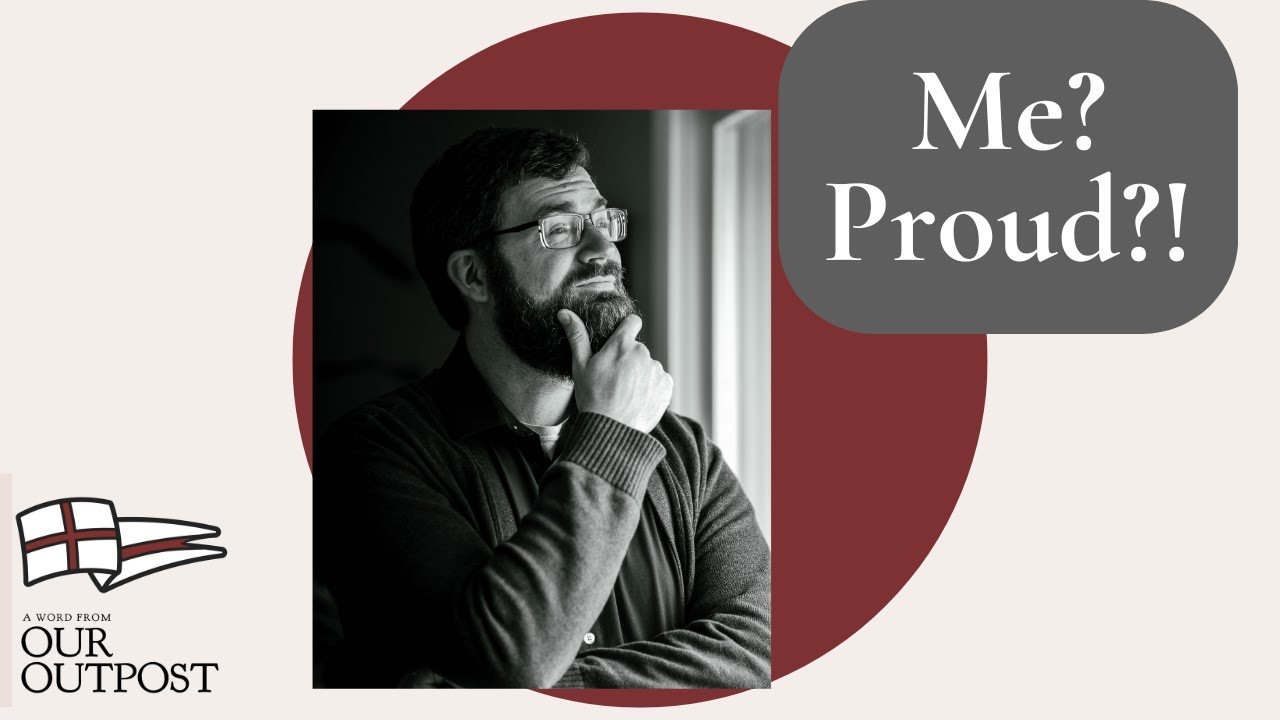
Episode 192 · 16 min · With Joseph Gruber
Three Tests for Pride
Take the Our Outpost Quiz
A free four-minute self-assessment for Catholic couples and singles. Tell us who you are, answer a few questions, and get personalized results emailed to you, with at least one way we at Our Outpost can help you answer the call of matrimony.
Take the Quiz →Key takeaways on tests for pride
- Test one: do I seek wise counsel? If we skip the wisest people we know at major crossroads, we may think we are wiser than we are, and prudence includes seeking counsel.
- Test two: do I walk into temptation? Thinking we can handle what would trip up others means thinking we are stronger than we are.
- Test three: do I excuse myself more than others? Cutting ourselves more slack than we give a spouse, children or strangers is a sign of pride.
- Self-deprecation can be pride too. Pride is not having an accurate picture of who we are in the eyes of God.
- A bonus test: can I laugh at myself? Knowing we are not the hero, and God is, is a great part of the joy of the Christian life.
“The point of being aware of our pride is to be free of it.”
Joseph Gruber
A prayer to try
Joseph suggests asking Jesus directly:
Lord, who am I in your eyes?
Will you be with me in temptation, and help me get out because I know I am weak?
Chapters
- 0:00 Three litmus tests
- 1:45 Test one: wise counsel
- 6:00 Test two: putting ourselves in temptation
- 8:15 Test three: giving ourselves a pass
- 10:05 Seeing ourselves through God’s eyes
- 13:00 A bonus fourth test
Mentioned in this episode
- The four cardinal virtues and the prudential act of seeking counsel
- Matthew 6, the Our Father
Full transcript
Three litmus tests
~0:00 Welcome to A Word from Our Outpost, with Joseph and Crystal Gruber — a podcast for Catholic disciples who are wrestling to be missionary-minded in their normal and everyday lives. In the name of the Father, and of the Son, and of the Holy Spirit. Amen. Direct, O Lord, our actions by Thy holy inspiration, and carry them on by Thy gracious assistance, that every word and work of ours may begin in Thee, and by Thee be happily ended.
Amen. In the name of the Father, and of the Son, and of the Holy Spirit. Amen. I’m going to talk today a little bit about three ways in which we might be more proud than we would like to admit. Three sort of tests, three litmus tests, if you will, to see, am I proud?
Is this a struggle that I have? These are not conclusive. You can come up with ways around these tests. They are not the only tests for pride, basically, if you’re not the Blessed Virgin Mary and you’re human, 100% human and only human, then you do struggle with pride to some degree. But I thought it might be helpful to go through three thought exercises that I have found to be incredibly incriminating when it comes to my own pride.
So, big spoiler alert, I fail these tests regularly. So, if you fail these from time to time, you are in such august company as me, which, you know, you’re listening to this podcast. Hi, how you doing? So, three tests to see if you are proud.
Test one: wise counsel
~1:45 The first test is to think of the wisest men and women that you know. Wisdom in the sense of they are good at listening, they’re good with advice, they’ve been through a lot, they have good perspective on what’s going on in the world and in the lives of the people that they love.
Think of some of the wisest men and women that you know. I’ll give you a sec. Okay, now here’s the test. Think of moments in your life where you have come to a crossroads where you had to make a significant decision. Did you reach out to any of those people to get their input, to ask for their advice, to see what they see?
Because if you didn’t, that might mean that you think that you’re wiser than the people that you just said are wiser than yourself. Which happens, right? And there are all sorts of reasons why we might not go to the wisest people because we might justify it saying, well, they’re too busy or maybe isn’t that big of a deal.
But I just set up the circumstances such that you conceded that it would be a big deal and that you know that these people are wise. And maybe I should have added the little caveat that they also should know you, but presumably you would know that they’re of their wisdom because you know them.
And so if you actually knew them and they were truly wise, you would know that they care for you and you would know that they would want to be able to at least listen in and be a sounding board as you’re coming to a major turning point in your life. So first test, I don’t know how you did.
I get mixed results on this one myself all the time. I make major decisions for myself and now I make major decisions for my family and for the marriage ministry that my wife and I started. And sometimes I’m asking for good advice and sometimes I’m seeking out the wisest of the wise and sometimes I’m not.
And the thing that I have to point to is that I actually arrogate to myself more wisdom than I really do have. So that’s not a good thing. That’s not good on several levels because it’s not good for me to have a distorted notion of who I am. It’s also not good to make decisions without the input of the wise.
Part of the prudential act is seeking counsel. And if I skip that step, I am lacking in prudence because I just don’t see everything. I have blind spots. There are things that I forget about, things that I’m not taking into account. There is perspective that would allow me to see whether the upcoming problem is a mountain or a molehill.
Sometimes I don’t know the difference between the mountain or the molehill coming up. And that certainly is something that somebody standing over there would be able to say, hey, no, that’s actually a big deal or no, that’s not such a big deal. It doesn’t make sense for me not to seek out advice except in so far as I may consider myself better than I am, wiser than I am.
So first test is, do I think that I’m wiser than I really am? And you can look at the receipts, you can look at major life decisions in your life and say, did I go for the best advice? If not, it’s probably because you thought you had the best angle on it or the only angle on it.
And that’s just not helpful. I say that as somebody guilty of this, it’s not helpful. All right,
Test two: putting ourselves in temptation
~6:00 another litmus test. Do I ever put myself into a situation that I know other people probably would do poorly in? And I think that I will do well. Do I put myself in a place of temptation? Do I say, of course I can go on social media and I won’t lose hours of my time.
Or of course I can watch this slightly raunchy movie. Or of course I can watch this really violent movie. Or of course I can do whatever other kind of risky decision. Because of course I won’t fall for whatever the danger is at the end of that road. I know especially in college, there were times when this was very much me where I thought, well, of course I can read that book.
Of course I can watch that movie. Of course, of course, of course, of course, because I’m strong enough. I am stubborn enough. I am resolute enough. I am unchanging in the face of things that are designed to influence me. Why would I think that? Well, one, because I’m wrong and two, because I’m proud.
So if I think that I’m stronger than I am, then I’m going to make ridiculous risky decisions that don’t make any sense that I would never advise other people to do. So again, if you can point to situations where you’ve done that, you are in such a company as myself and many other people.
Because part of pride is thinking that we are stronger than we really are. That we are not going to fall prey to the traps that other people set. It doesn’t matter what music I listen to. It doesn’t matter what media I consume. If it matters for other people, and most of us will concede that it would matter for other people, the only reason we would say it doesn’t matter when it comes to us is because we have an inflated idea of who we are.
Okay,
Test three: giving ourselves a pass
~8:15 final test. A way to tell if you might be proud. If you are more willing to give yourself a pass for something than other people. If you can excuse more of your nonsensical behavior, your irrational behavior, your acerbic or sarcastic, or grumpy, or irritable, or, I don’t know, whatever kinds of things that you would find frustrating in other people.
If you’re willing to make more allowances for yourself. Again, I say this because I know that I will make more allowances for myself than I do for other people. That I will be more shocked at other people’s shortcomings than at my own. And some of this, sure, maybe there’s this over self-deprecating piece to it.
But that also is an element of pride. You can have an inflated vision of yourself, and that’s prideful. You can have a diminished view of yourself, and that’s still an element of pride. Pride is more generally like not actually having an accurate picture of who you are and where you fit in the world and who you are in the eyes of God.
So if I’m more likely to excuse myself than I am to excuse my spouse, or to leap to conclusions when it comes to my children, or to family members, or to people in politics, or people in church, if I’m more willing to leap to conclusions for them, and be offended if people leapt to conclusions about me, I would want them to cut me more slack than I’m willing to give them.
That is my friend, is a sign of pride. I’m sorry. So I don’t know how you did on that.
Seeing ourselves through God’s eyes
~10:05 Why would I put you through this? Why would I subjugate you to an episode where maybe by the end you’re feeling bad about yourself? Well, one, because we need to be in touch with reality, we need to know how we’re doing if we want to improve. And two, the whole point of this Christian story is that we cannot save ourselves.
We’re not actually capable of accomplishing all that we want to accomplish. We’re not capable of growing in the way that we need to grow. But even more so, we’re not capable of seeing ourselves rightly until we see ourselves through the eyes of God, who loved us into being, who wants to save us from our sin, and who wants to be with us now and into eternity.
So one of the ways to look at all three of those tests, do we actually consult God? Do we invite God into the situation whenever we’re facing temptation and we should cry out, you know, lead us not into temptation? And do we have an appreciation for the one man who is without guilt and how our sins are perceived by him, right?
I’m not asking you to beat yourself up about any of your sins. I’m not asking you to flagellate or to go into like a spiral. I’m asking you to ask God how He views you, to look into the eyes of Jesus and to say, Lord, who am I in your eyes? Can you tell me who I am, how I fit into this world?
And will you tell me your view of me? Will you tell me what I need to know in order to make the next decision? Will you be with me in times of temptation? And will you help me to get out of them because I know that I am weak? And when I mess up, will I be more willing to accuse myself before you, the just judge, than to excuse myself before myself and others?
That’s the point, that the point of being aware of our pride is to be free of it. The point of our pride is to let go of it, to know that we are sometimes, to the point of silliness, ridiculous people. If you made a list at the beginning of wise people and you didn’t consult them in major life decisions, that was a silly thing.
But we’re silly people. We are more ridiculous than we like to admit. And so we can take ourselves lightly. One of the signs of pride,
A bonus fourth test
~13:00 this is like a fourth one. I won’t put this in the title, so this will surprise you at the end. The fourth way is, can we laugh at ourselves when we mess up? Can we take ourselves lightly? Can we have a sense of humor about the fact that we’re not as great or as wise or as strong as we would hope to be?
Because if we can’t, then we’re missing some of the joy that is there. Some of the joy is the fact that, yep, we’re not the hero, we’re not the savior, and God is. And that is quite a bit of the joy of the Christian life is saying, I am not as trustworthy or as wise as I once thought that I was.
And that’s okay. It really is okay. All right. I believe that we have a website. My wife and I have a marriage ministry. At the time of this recording, we’re working on some stuff for Catholic Singles to teach them about dating. If you are Catholic and single between the ages of 22 and 35-ish, currently on our website, you can sign up for time to chat with us so we can figure out more what’s going on in the dating world today.
Most of what we’re hearing is something around dumpster fire-esque. So that’s been interesting to get people’s feedback. We’re also going to have more things for married couples as we go. But thanks for listening to the end. Really appreciate you. Feel free to share this with someone else. If they think it’s some sort of like finger pointing at them that they’re prideful, well, I mean, we are.
So hopefully they can take the joke because that is one of the great jokes of existence is that we don’t want to admit how silly we are. All right. On that note, I’ll pray us out. In the name of the Father, and of the Son, and of the Holy Spirit, amen. Our Father, who art in heaven, hallowed be thy name.
Thy kingdom come, thy will be done, on earth as it is in heaven. Give us this day our daily bread, and forgive us our trespasses, as we forgive those who trespass against us, and lead us not into temptation, but deliver us from evil, amen. In the name of the Father, and of the Son, and of the Holy Spirit, amen.
From Our Outpost to yours, thanks for listening, and a special thanks to JohnMarc Skoch for the music. Check him out on Spotify.
Keep listening
Share this episode
Which of the three tests for pride did you find hardest to pass?